Stainless Steel Laser Cutting Services: The 2026 Industrial Guide
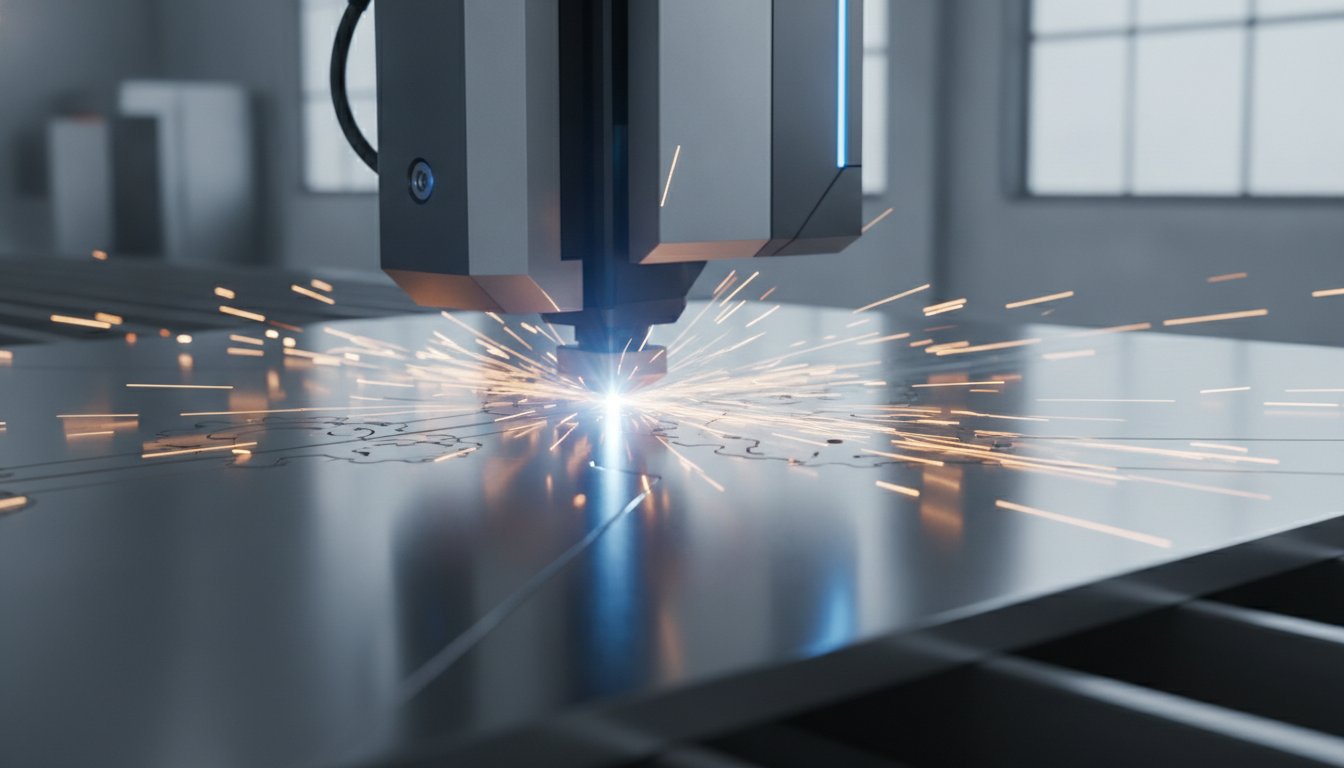
In 2026, your digital design is only as good as the machine that cuts it. While many shops claim precision, the reality of industrial production often involves inconsistent edge quality and lead times that stall your entire project. You've likely dealt with the headache of parts that arrive with burrs or tolerances that don't quite meet your assembly requirements. It's a common bottleneck that prevents a smooth transition from a prototype to a full-scale national production run.
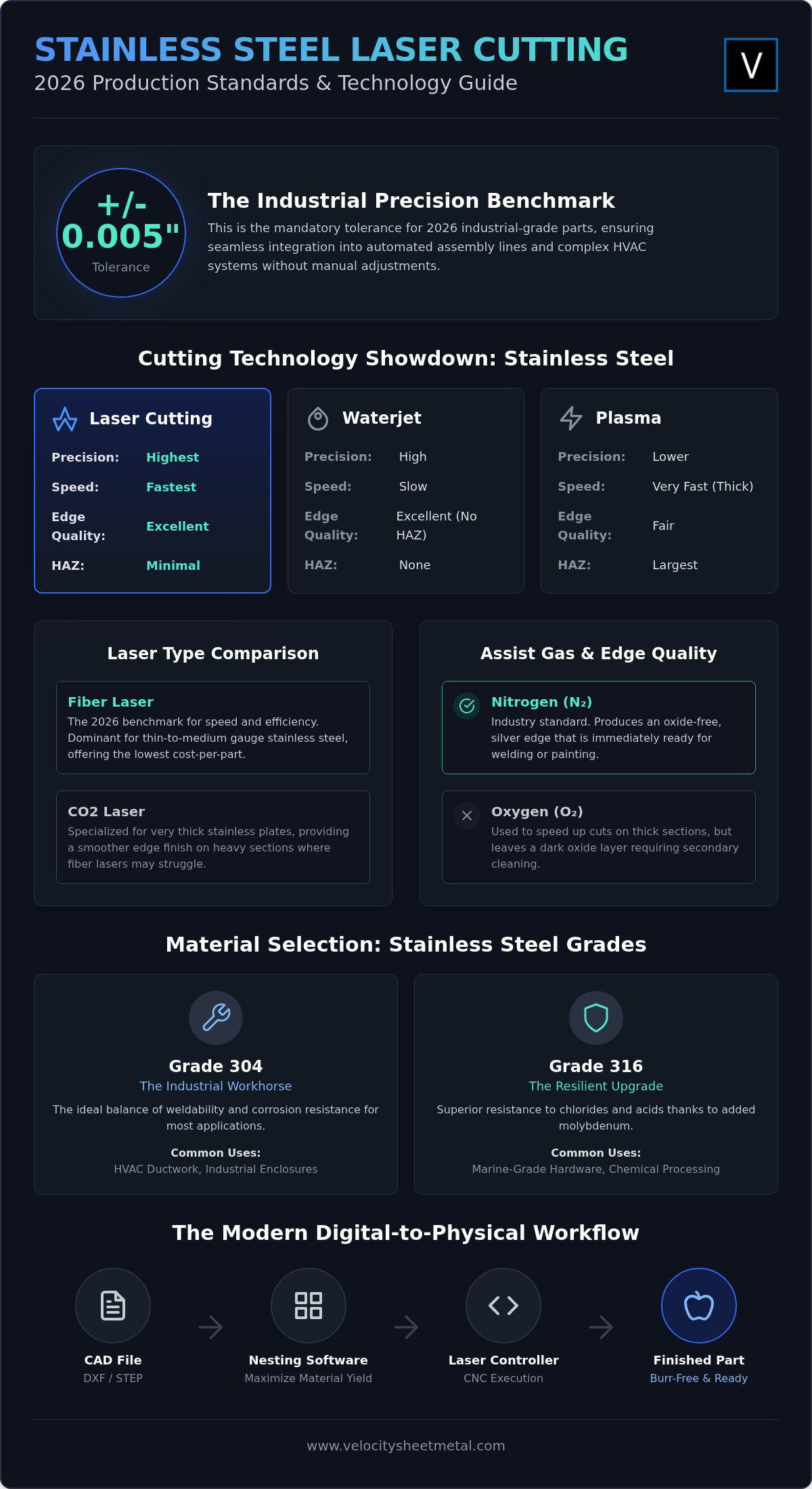
High-quality stainless steel laser cutting services must act as a seamless bridge between your CAD file and a physical product. This guide provides the technical roadmap you need to master 2026 production standards, ensuring every part hits that critical +/- 0.005 inch tolerance. We'll explore the dominance of fiber laser technology, the specific requirements for austenitic grades like 304 and 316, and the logistics of scaling your workflow for national distribution. You'll learn how to eliminate administrative delays and secure burr-free parts that are ready for immediate integration.
Key Takeaways
- Identify the technical parameters required to achieve the +/- 0.005" precision benchmark for industrial-grade stainless parts.
- Understand how modern stainless steel laser cutting services provide superior edge quality and faster cycle times than plasma or waterjet alternatives.
- Leverage BIM coordination and DFM principles to eliminate field collisions and optimize your digital-to-physical production workflow.
- Learn why Grade 304 remains the versatile workhorse for high-performance industrial and HVAC ductwork applications.
- Scale your operations nationwide by utilizing national account management to ensure part consistency and eliminate local inventory bottlenecks.
What are Stainless Steel Laser Cutting Services?
Laser cutting is a CNC-controlled thermal process that uses a high-powered beam to vaporize or melt material along a programmed path. While the basic principles remain the same across different metals, stainless steel laser cutting services require a specific technical approach. Unlike carbon steel, stainless steel is highly reflective and has a different thermal conductivity profile. This means the machine parameters must be precisely tuned to prevent back-reflection that can damage the laser source or cause inconsistent cuts.
The choice of assist gas defines the final edge quality. Nitrogen is the industry standard for stainless steel in 2026. It acts as a mechanical force to blow away molten metal without allowing oxygen to react with the material. This results in an oxide-free, silver edge that's ready for welding or painting without secondary cleaning. Oxygen can be used for thicker sections to speed up the process through an exothermic reaction, but it leaves a dark oxide layer that usually requires manual removal. The modern 2026 workflow is entirely digital. It starts with a DXF or STEP file. This data is nested to maximize material yield and then sent directly to the laser's controller. This seamless transition from digital design to physical part eliminates manual layout errors and ensures repeatable accuracy across national production runs.
Fiber Laser vs. CO2 Laser for Stainless Steel
Fiber lasers have become the 2026 benchmark for speed and efficiency. They excel at thin-to-medium gauge stainless steel, offering significantly faster cutting speeds than traditional CO2 systems. This speed translates directly into a lower cost-per-part for national accounts and OEMs. However, CO2 lasers still hold a place in the workshop for very thick stainless plates. They often provide a smoother edge finish on heavy sections where a fiber laser might leave a slightly more textured surface. For the majority of industrial ductwork and precision components, the fiber laser is the superior choice for throughput and precision.
The Industrial Advantage of Stainless Steel
Stainless steel is the preferred choice for HVAC and OEM applications due to its inherent corrosion resistance and structural integrity. In high-visibility environments, achieving a burr-free finish is a functional requirement, not just an aesthetic choice. Precision cutting ensures parts fit perfectly during assembly, reducing labor costs in the shop. A critical factor in this durability is the Heat Affected Zone (HAZ). The HAZ is the area of base metal that has had its microstructure and properties altered by the heat of the cut; minimizing this zone is essential to prevent localized corrosion and maintain the material's original strength. By using high-density beams and optimized speeds, modern stainless steel laser cutting services keep this zone narrow, preserving the alloy's performance.
Precision Standards: Tolerances and Stainless Grades in 2026
The +/- 0.005 inch tolerance is the 2026 baseline for industrial stainless steel laser cutting services. This level of precision is mandatory for components that must integrate into automated assembly lines or complex HVAC systems without manual adjustment. Achieving these tight specs requires a deep understanding of how different stainless alloys react to thermal stress. While carbon steel is predictable, stainless steel's thermal expansion can pull a part out of spec if the cutting path isn't optimized. Modern shops utilize advanced nesting software and real-time beam adjustment to maintain these high standards across every production run.
Material selection dictates the success of your final component. Grade 304 remains the industrial workhorse. It provides the ideal balance of weldability and corrosion resistance for standard industrial enclosures and HVAC ductwork. For projects exposed to harsher conditions, Grade 316 is the necessary upgrade. Its molybdenum content provides superior resistance to chlorides and acidic environments, making it the standard for marine-grade hardware and chemical processing OEMs. From 26-gauge decorative foil to 1-inch heavy structural plate, the evolution of laser technology now allows for clean, vertical cuts across a massive range of thicknesses that were previously reserved for slower, more expensive methods.
Tolerances for Mechanical Integrity
Dimensional accuracy is about more than just the final shape; it's about mechanical integrity. Kerf compensation is a critical part of this process. It's the software-driven adjustment that accounts for the width of the laser beam itself, ensuring the finished part matches the digital DXF file exactly. For large-scale stainless panels and industrial enclosures, flatness is equally vital. High-quality fabrication ensures that the heat from the laser doesn't warp the material, allowing for a seamless fit when parts move to the next stage of production. If your project requires this level of detail, you can explore custom laser cutting options that prioritize these exacting standards.
Choosing the Right Finish for Your Application
The finish of your stainless steel is as important as the cut. A 2B mill finish is the standard for most industrial applications where utility is the priority. In contrast, a #4 brushed finish is preferred for architectural components or food-grade equipment where aesthetics and cleanability are paramount. Modern laser systems preserve these finishes by cutting through protective PVC films without melting them onto the metal surface. Once the cut is complete, post-processing steps like automated deburring and CNC press brake bending transform these flat profiles into finished, ready-to-install components. This integrated approach ensures that the "burr-free" promise is met before the parts ever leave the shop floor.
Laser Cutting vs. Waterjet and Plasma for Stainless Steel
Industrial efficiency is measured in inches per minute. Stainless steel laser cutting services dominate the market because they provide the highest speed-to-precision ratio available for modern manufacturing. For gauges between 26 and 1/2 inch, fiber lasers outpace waterjets by a factor of five or more. This speed reduces machine time costs while minimizing material waste through tighter nesting capabilities. Unlike plasma, which can melt away fine details or cause warping, the laser beam remains highly concentrated. It creates a clean, square edge that requires zero secondary finishing. This efficiency is the essential bridge between a digital file and a tangible, high-quality component.
Cost-effectiveness in 2026 is driven by the elimination of secondary labor. When a part comes off a laser table, it's ready for the next stage of production. There's no need for de-slagging or edge grinding. This streamlined workflow allows national accounts to scale production without increasing their shop-floor headcount. By balancing rapid machine time with high material utilization, laser cutting offers the most sustainable and profitable path for OEM part production.
The Waterjet Alternative
Waterjet cutting is the specialized choice for ultra-thick stainless steel plates exceeding 1.5 inches. It uses a high-pressure stream of water and abrasive to erode the metal. This cold-cutting process eliminates the heat-affected zone entirely; it preserves the mechanical properties of the stainless without any thermal stress. While this is a critical advantage for heavy structural components, the trade-off is production speed. Waterjets are significantly slower and more expensive to operate per hour than fiber lasers. For the vast majority of industrial projects, laser cutting remains the primary choice for precision laser cutting services due to its rapid turnaround and digital integration.
Industrial Plasma Cutting
Plasma cutting serves the structural steel market where edge taper and dross are acceptable. It's a high-speed process for non-precision parts. However, the downside for stainless steel is significant heat distortion on thin-gauge components. Plasma creates a wide heat-affected zone that can compromise the corrosion resistance of the alloy. High-power fiber lasers, ranging from 12kW to 80kW, have effectively bridged the gap between plasma's thickness capabilities and laser's precision. OEMs are increasingly moving away from plasma toward these high-wattage systems. This shift eliminates the need for secondary grinding; it moves the part from the cutting table to the assembly line in a single step. By avoiding the rougher plasma finish, manufacturers reduce labor costs and improve the overall structural integrity of the finished assembly.
Optimizing Stainless Steel Parts for Rapid Production
Efficiency starts on the screen. Design for Manufacturability (DFM) isn't just a buzzword; it's a technical requirement for high-volume stainless steel laser cutting services. By optimizing part geometry, you reduce the total cut path length and minimize the number of pierces. This directly lowers machine time. Advanced nesting strategies further refine the process by maximizing sheet yield. For national accounts, this means getting more parts out of every 304 or 316 stainless sheet, which significantly impacts the bottom line on multi-state production runs. From the initial digital file to the final physical component, every design choice should prioritize speed and material conservation.
While many shops treat parts as isolated objects, industrial success requires a systems-based approach. Integrating BIM clash detection for HVAC fabrication allows you to identify field collisions before the laser ever touches the metal. This digital-to-physical workflow ensures that every flange, bracket, and duct fitting fits the first time. It eliminates the costly rework associated with manual field adjustments. If you're ready to modernize your production line, you can get a custom laser cutting quote to see how this technical integration works in practice.
From Model to Machine: The Digital Workflow
Standardizing your file formats is the first step toward rapid production. STEP and DXF files are the 2026 standard because they provide the clean vector data that CNC controllers require. Mechanical spooling takes this a step further by breaking down a complex, multi-component system into individual, laser-ready parts. Spool drawings bridge the gap between engineering design and the factory floor by providing clear, sequential instructions for fabrication and assembly. This methodical approach keeps the production line moving without administrative delays, moving your project quickly from a digital concept to a tangible result.
Common Pitfalls in Stainless Design
Intricate details can be a liability in stainless steel. Overly complex geometry in a small area leads to localized heat buildup, which can cause warping or slag. A good rule of thumb is to keep minimum hole diameters at least equal to the material thickness for clean, consistent pierces. You also need to account for bend allowances early in the design phase. This ensures that when your parts move to CNC press brake services for OEMs, the final dimensions remain within that critical +/- 0.005 inch tolerance. Precision at the laser table is wasted if the design doesn't account for the physical realities of the bending process.
Scaling Production: National Stainless Fabrication for OEMs
Scaling industrial production in 2026 requires more than just high-speed machines; it requires a tech-savvy logistics partner. Stainless steel laser cutting services are the engine, but national account management is the fuel. For OEMs and large-scale contractors, the challenge isn't just getting one part right; it's getting ten thousand parts right across five different states. Velocity eliminates the variability of fragmented local shops by centralizing production in a high-capacity, automated facility. This on-demand model allows you to reduce massive client-side inventories and shift toward a leaner, just-in-time production cycle. You no longer need to warehouse months of stock when you can pull precision parts from a reliable national stream.
Logistics are the final piece of the digital-to-physical bridge. We ensure that precision-cut components are packaged for protection and shipped nationwide to meet your exact assembly schedule. This level of coordination makes Velocity the ideal partner for HVAC duct fabrication for mechanical contractors who need more than just metal; they need a reliable supply chain. By utilizing a single-source partner, you gain accountability that a decentralized network of vendors simply cannot provide. We manage the entire flow, from the initial CAD review to the final delivery at your job site.
Standardizing Quality for National Accounts
Consistency starts with material sourcing. We use grade-certified 304 and 316 stainless to ensure every part meets the structural and chemical requirements of your project. Automated facilities reduce the risk of human error, maintaining the +/- 0.005 inch tolerance across high-volume orders. From the first piece to the last, the edge quality and dimensional accuracy remain identical. This predictability is essential for projects that span multiple regions and require uniform performance. We provide the documentation and repeatability that national accounts demand to keep their multi-state project sites moving forward.
The Velocity Advantage
We combine the speed of automated coil-line production with the surgical precision of custom laser cutting. This hybrid approach allows us to handle everything from standard rectangular duct to intricate OEM components under one roof. With 50+ years of combined management experience, we apply deep industry knowledge to modern 2026 manufacturing hurdles. We don't just cut metal; we solve production bottlenecks and streamline your procurement. Ready to scale? Contact Velocity Sheet Metal for a precision quote.
Streamline Your 2026 Production Cycle
Mastering industrial production in 2026 requires a shift from simple part fabrication to integrated technical systems. You now have the technical roadmap to navigate material grades, optimize design geometry for rapid throughput, and leverage BIM coordination to prevent field collisions. High-precision stainless steel laser cutting services are the essential bridge that turns your complex digital files into burr-free, tangible components ready for immediate assembly. By focusing on tight tolerances and automated workflows, you eliminate the administrative delays and quality inconsistencies that frequently stall national growth.
Velocity Sheet Metal brings over 50 years of combined industry experience to every project. Our BIM-integrated fabrication workflow and national shipping capabilities ensure your parts arrive on schedule; we manage the logistics so you can focus on the build. It's time to move beyond the limitations of local shops and embrace a scalable, tech-driven partnership that prioritizes your timeline. We're ready to help you hit your production targets with surgical precision and industrial reliability. Request a Quote for National Stainless Steel Laser Cutting and let's get to work on your next project.
Frequently Asked Questions
How thick can a laser cut stainless steel in 2026?
Modern fiber lasers in 2026 can cut stainless steel plates up to 1 inch thick while maintaining industrial precision. High-wattage systems exceeding 12kW have expanded these limits, allowing laser technology to compete with plasma on heavier structural sections. For most industrial and HVAC applications, this range covers everything from thin decorative foils to heavy-duty mounting brackets. The process ensures a clean, vertical edge regardless of the material thickness.
What is the standard lead time for national stainless laser cutting orders?
Lead times for national stainless steel laser cutting services depend on project volume and design complexity. Velocity's automated production workflow is built to eliminate the typical administrative delays found in smaller shops. We prioritize efficiency from the initial digital file review to the final logistics phase. Providing a completed DXF or STEP file is the fastest way to receive a firm delivery schedule for your national account.
Can you laser cut stainless steel without discoloring the edges?
Yes, you can achieve a clean, silver edge by using nitrogen as an assist gas during the cutting process. Nitrogen prevents oxygen from reacting with the molten metal, which eliminates the dark oxide layer and discoloration typically associated with thermal cutting. This results in a burr-free finish that's ready for immediate welding or assembly. It's the standard requirement for high-end OEM components and visible architectural stainless steel parts.
What is the difference between 304 and 316 stainless for laser cutting?
Grade 304 is the versatile industrial workhorse used for standard enclosures and HVAC ductwork due to its excellent weldability. Grade 316 contains molybdenum, which provides superior resistance to chlorides and acidic environments. While both grades cut similarly under a fiber laser, 316 is the necessary choice for marine or chemical processing applications. Choosing the right grade ensures your laser-cut parts survive their specific operational environment without premature corrosion.
Do you provide CNC bending for laser-cut stainless parts?
We provide full CNC press brake bending services to transform your flat laser-cut profiles into finished industrial components. This integrated approach ensures that bend allowances are accounted for during the initial design phase, maintaining tight dimensional tolerances throughout the entire fabrication process. By handling both cutting and bending under one roof, we reduce the risk of handling errors and streamline the transition from a digital model to a tangible product.
How does BIM coordination improve the accuracy of laser-cut HVAC components?
BIM coordination allows us to identify and resolve field collisions in a digital environment before the first piece of metal is cut. This data-driven approach ensures that every laser-cut HVAC component fits perfectly within the complex mechanical systems of a modern building. It eliminates the need for costly on-site modifications and manual rework. By using spool drawings derived from the BIM model, we maintain a seamless, error-free production flow.
Is laser cutting more cost-effective than waterjet for high-volume stainless parts?
Laser cutting is significantly more cost-effective than waterjet for high-volume stainless steel parts in thin to medium gauges. The primary advantage is speed; fiber lasers can process sheets at a much higher velocity, which lowers the overall machine time cost per part. While waterjet is useful for ultra-thick materials that can't tolerate heat, laser cutting remains the dominant choice for industrial production due to its superior throughput and lower operational overhead.
Can I ship custom laser-cut parts to multiple national account locations?
Velocity provides national stainless steel laser cutting services designed to support accounts with multi-state project requirements. We offer nationwide shipping and can coordinate deliveries to multiple locations to keep your various job sites on schedule. Our management team applies over 50 years of combined experience to handle the complex logistics of national distribution. This centralized production model ensures that every part meets the same high standard of precision and quality.