Precision Laser Cutting Services: The 2026 Buyer’s Guide for Industrial Parts
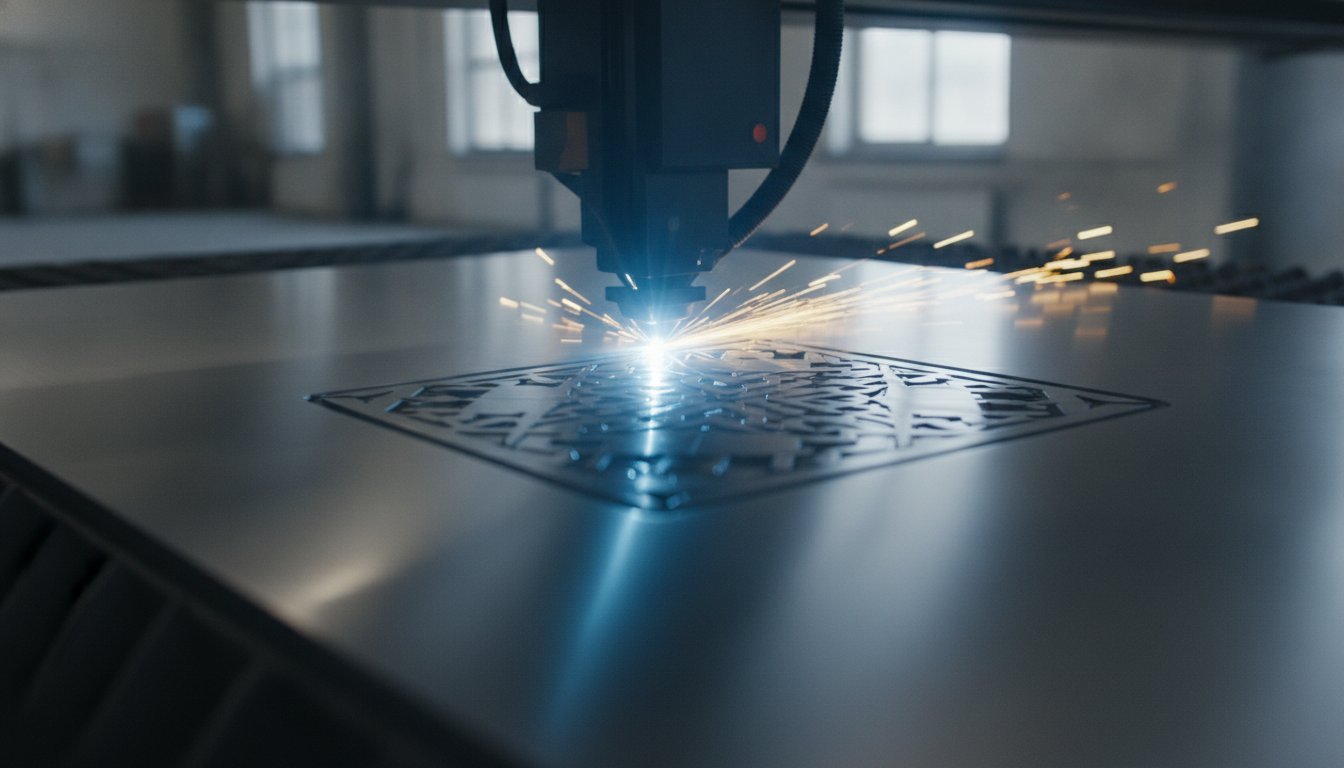
The real cost of an industrial part isn't the number on the initial quote; it's the hours of secondary labor your team wastes because of inconsistent edge quality. If you've dealt with serrated finishes or assembly delays caused by unreliable lead times, you know that a low price often hides a massive production bottleneck. Choosing the right precision laser cutting services in 2026 requires more than just looking at wattage. It requires a partner who understands the new ANSI Z136.1-2026 safety standards and the logistical demands of a national supply chain.
You need parts that move straight from the shipping crate to the assembly floor without hesitation. This guide will help you master the technical criteria and logistics needed to select a national fabrication partner that integrates perfectly with your timeline. We'll explore how to reduce secondary finishing through higher precision, ensure your BIM and CAD models translate seamlessly to the factory floor, and verify that your provider meets the updated 2026 compliance benchmarks. From digital design to final delivery, we're cutting through the administrative noise to show you what modern industrial reliability looks like.
Key Takeaways
- Identify why fiber laser technology has replaced CO2 as the 2026 benchmark for achieving ±0.005 precision in industrial metal fabrication.
- Evaluate the critical differences between direct manufacturers and broker networks to ensure consistent quality for high-volume national accounts.
- Master Design for Manufacturing (DFM) principles to balance tight tolerances with project budgets and avoid the hidden costs of over-specification.
- Navigate the material capabilities of precision laser cutting services across a range of substrates, from 26-gauge sheet to heavy plate components.
- Learn how integrating BIM coordination with automated production lines eliminates field delays and ensures parts fit perfectly on the first try.
What are Precision Laser Cutting Services in 2026?
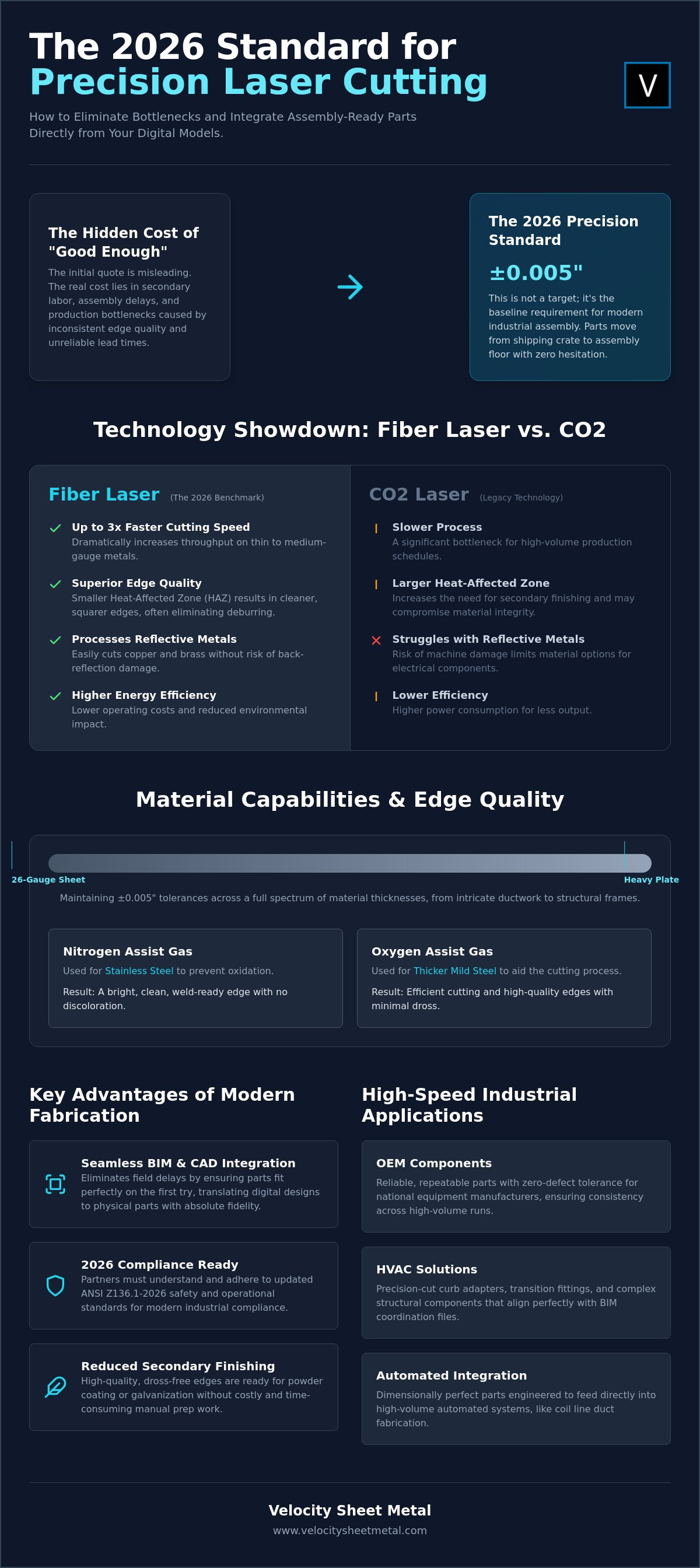
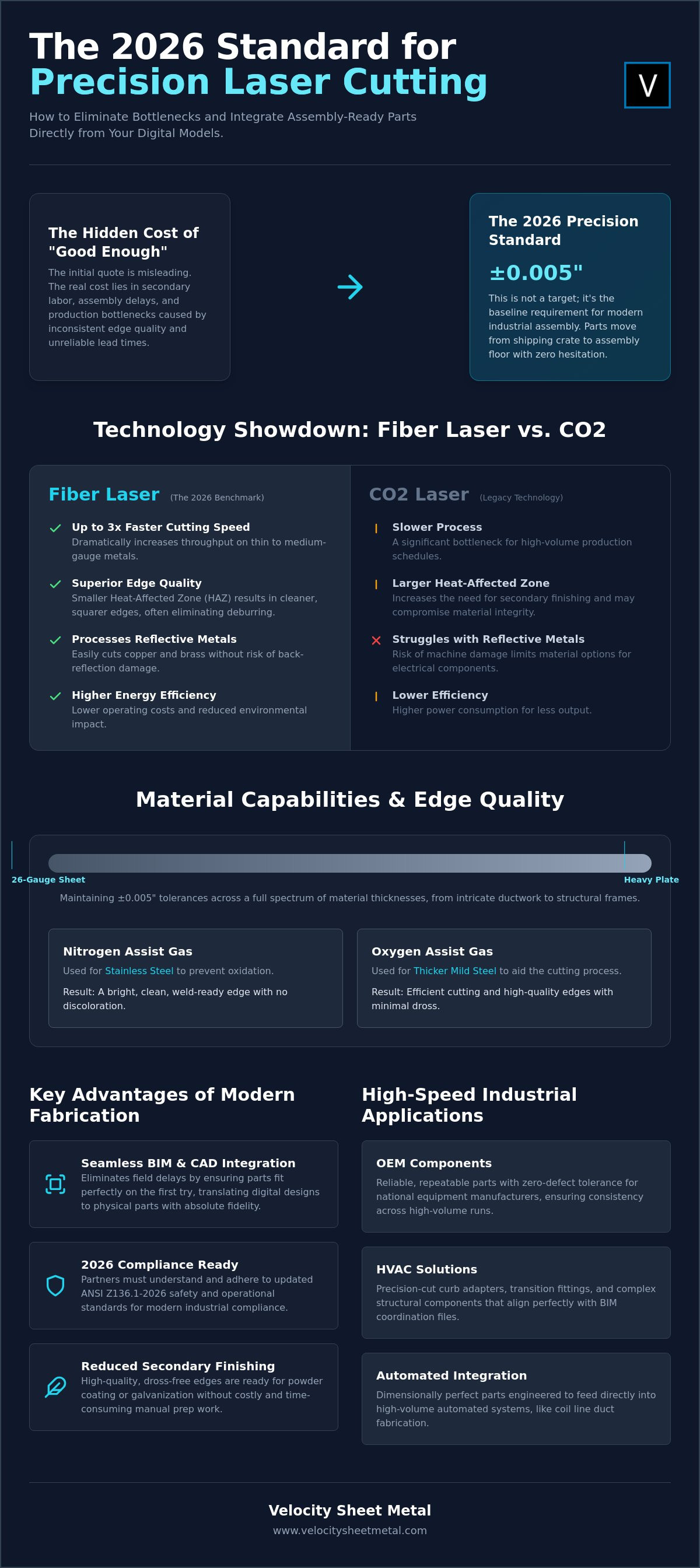
In 2026, precision laser cutting services are defined by a baseline standard of ±0.005 inches. This isn't a target; it's a requirement for modern industrial assembly. We've moved past the era where a "close enough" cut was acceptable for the shop floor. High-powered fiber laser technology now vaporizes material with such surgical accuracy that secondary deburring is often eliminated entirely. This efficiency allows a seamless transition from a digital BIM model to a physical part ready for immediate installation. High speed. High accuracy. No excuses.
The shift to 2026 has seen fiber lasers almost entirely replace CO2 systems for industrial metal fabrication. While CO2 served the industry for decades, the increased energy efficiency and beam density of fiber systems have rendered older methods obsolete for most metal applications. This evolution in Laser cutting technology has transformed how we approach everything from OEM component manufacturing to custom HVAC transition fittings. Precision matters because it dictates the speed of your downstream production. When parts fit perfectly, your assembly line doesn't stop. It's the difference between a project that stays on schedule and one that gets bogged down by manual adjustments.
Fiber Laser vs. CO2: The Industrial Standard
Fiber lasers deliver up to 3x the cutting speed on thin to medium-gauge metals compared to their CO2 predecessors. This speed doesn't come at the cost of quality. In fact, the concentrated beam quality results in a smaller heat-affected zone (HAZ) and superior edge squareness. One of the most significant advantages is the ability to process reflective metals like copper and brass. Older CO2 lasers struggled with back-reflection, which could damage the machine; modern fiber systems handle these materials with ease. This expands your possibilities for electrical components and specialized industrial hardware.
Industrial Applications: Beyond Simple Shapes
Industrial laser cutting has evolved into a high-speed engine for on-demand part production. We see this daily in the creation of custom brackets, enclosures, and complex structural HVAC components. By removing the bottlenecks of traditional cutting, we move your project from a digital concept to a finished product in record time. Common applications include:
- OEM Components: Reliable, repeatable parts for national equipment manufacturers that require zero-defect tolerance.
- HVAC Solutions: Precision-cut curb adapters and transition fittings that align perfectly with BIM coordination files.
- Automated Integration: Laser-cut parts that feed directly into high-volume coil line duct fabrication.
The result is a streamlined workflow that moves from the screen to the shipping crate without the typical administrative delays. We focus on technical capability so your team can focus on assembly.
Material Capabilities and Precision Tolerances
Material selection dictates the success of your industrial assembly. High-performance precision laser cutting services must handle a spectrum of substrates while maintaining tight tolerances across varying thicknesses. In 2026, the standard for thin-gauge sheet metal remains a precise ±0.005 inches, but as material thickness increases toward heavy plate, maintaining that level of accuracy requires advanced beam modulation. We process everything from 26-gauge sheet used in intricate ductwork to heavy-duty plate components for structural frames. The goal is a finished part that requires zero manual correction before it reaches the next stage of production.
Surface quality is just as critical as dimensional accuracy. A clean cut minimizes dross, the solidified melt that can cling to the bottom edge of a part. High-quality edges are essential for parts destined for powder coating or galvanization, as dross creates points of failure for finishes. The rise of industrial automation in laser cutting has made it possible to maintain these tolerances at scale, ensuring the 1,000th part is identical to the first. If your project requires specific material grades, you can check our available custom laser cutting capabilities for your next run.
Steel and Stainless Steel Performance
Edge quality in steel depends heavily on the assist gas. We use Nitrogen for stainless steel to prevent oxidation, resulting in a bright, weld-ready edge. For thicker mild steel, Oxygen assist gas provides the necessary thermal boost, though it leaves a thin oxide layer. When handling galvanized steel for HVAC applications, our fiber lasers are tuned to minimize damage to the zinc coating, preserving the material's corrosion resistance. This precision is vital for high-volume rectangular duct components where fit-up must be airtight and immediate.
Aluminum Laser Cutting Challenges
Aluminum's high thermal conductivity and reflectivity once made it difficult to cut. Modern 2026 fiber systems overcome this, allowing for clean profiles in common alloys like 5052 and 6061. Alloy 5052 is preferred for its formability in custom panels, while 6061 offers the structural integrity needed for brackets and frames. Achieving precision in aluminum requires high-pressure Nitrogen to blow out the molten metal quickly, preventing the rounded edges often seen with inferior equipment. Once cut, these parts often move directly to CNC press brake bending to achieve their final geometry. This integrated approach ensures that the precision established during the laser cut is maintained through the final bend.
Evaluating a National Laser Cutting Partner
Selecting a partner for precision laser cutting services is about more than evaluating machine specs. It's an infrastructure audit. You must decide between a direct manufacturer and a broker network. Brokers act as middle-men, often adding layers of administrative delay and markup without owning the production floor. This lack of oversight leads to inconsistent standards and finger-pointing when tolerances drift. Direct manufacturers offer accountability. They control the maintenance cycles, the gas mix, and the nesting efficiency. When you work with the source, you get transparency from the initial quote to the final delivery.
Scalability is the benchmark for national accounts. A local shop might handle a prototype, but can they deliver the 10,000th part with the same precision as the first? Consistent production requires standardized quality controls that don't fluctuate between shifts. Logistics play a massive role here. A partner with national shipping capabilities for precision laser cutting services reduces lead times by moving parts through optimized distribution channels. This ensures your assembly team isn't waiting on a crate while the clock is ticking on a multi-million dollar project.
Capacity and Bottleneck Management
Machine redundancy is non-negotiable for high-volume production. If a shop relies on a single high-power laser, your timeline is one mechanical failure away from a total halt. We prioritize capacity through automated material handling and multiple redundant systems. This "no-bottleneck" philosophy ensures on-time delivery even during peak demand. Velocity Sheet Metal leverages over 50 years of combined experience to maintain these standardized results across every custom run. We don't just cut metal; we manage your production risk. It's about reliability that scales with your growth.
The BIM Integration Advantage
The most significant gap in the current market is the lack of BIM coordination expertise among fabricators. Your laser cutting partner shouldn't just be a machine operator; they should be a technical extension of your design team. We move directly from spool drawings to the laser, eliminating the manual data entry errors that plague traditional shops. This seamless digital-to-physical transition ensures that BIM coordination prevents costly field collisions before they happen. By integrating these models into our automated workflow, we ensure every bracket, flange, and transition fitting fits the field assembly on the first try. Precision in the software is just as vital as precision in the beam.
Design for Manufacturing (DFM): Reducing Cutting Costs
Efficiency starts on the screen, not the factory floor. While modern precision laser cutting services can handle almost any geometry, the complexity of your design directly dictates your final invoice. Every piercing, every intricate curve, and every tight corner adds machine time. Industrial pragmatism requires a balance between design intent and production reality. If a part can be simplified without sacrificing function, the cost savings are immediate. We see this most clearly in the 'Tolerance vs. Price' trade-off. Over-specifying tolerances where they aren't needed leads to unnecessary inspection time and higher rejection rates. Stick to the precision you need, not the precision the software allows by default.
Material nesting is the second pillar of cost reduction. Smart nesting strategies maximize the number of parts per sheet, reducing scrap waste and lowering your material overhead. By grouping parts effectively, we minimize the travel distance of the laser head and optimize the use of assist gases. This methodical approach ensures that your project remains within budget while meeting the highest quality standards. If you're looking to optimize your next production run, you can request a technical review of your design files today.
Optimizing CAD Files for Laser Cutting
A clean digital file is the fastest route to an accurate quote. Before sending your designs, ensure you've cleaned up all vector paths and removed overlapping lines. These "ghost lines" confuse the CNC software and can lead to double-cutting, which damages both the part and the machine. Standardize your hole diameters to match or exceed the material thickness; a 1:1 ratio is the industrial rule of thumb. Providing clean DXF or DWG files allows our team to move from the initial digital concept to the final physical result without the administrative delays of manual file correction.
Nesting and Material Efficiency
Advanced nesting techniques like common line cutting allow the laser to cut shared edges between two parts simultaneously. This strategy reduces gas consumption and slashes total cutting time. For smaller components, we utilize strategic tabbing to prevent 'tip-ups.' A tip-up occurs when a small part tilts after being cut, potentially colliding with the laser head and causing machine downtime. These efficiencies are critical in large scale ductwork production, where even a 5% improvement in material yield translates to significant savings across a national account. We focus on these details so your production timeline stays on track.
The Velocity Advantage: On-Demand Parts and National Scale
Velocity Sheet Metal bridges the gap between digital design and physical reality. We combine 50+ years of industry experience with the latest automated technology to deliver precision laser cutting services that meet the most demanding industrial standards. We don't just cut parts; we integrate into your production timeline. Our facility operates as a high-speed engine for OEMs and mechanical contractors who cannot afford the delays of traditional fabrication. By combining deep engineering expertise with modern fiber laser systems, we ensure that every part leaving our floor is ready for immediate assembly.
Standardized quality is our baseline. For national accounts, this means the quality of a part delivered to any site across the country is consistently identical. Our national shipping capabilities allow us to serve contractors across the United States with the same reliability as a local shop, but with the scale of a Tier-1 manufacturer. We manage the logistics so you can focus on the build. From custom brackets to high-volume industrial components, our workflow is designed to eliminate the administrative friction that typically slows down national procurement.
Custom Solutions for HVAC and Construction
We specialize in the complex geometries required for modern HVAC and construction projects. This includes fabricating custom curb adapters and transition fittings with surgical laser precision. Our automated coil-line production for rectangular ductwork works in tandem with our on-demand part manufacturing, creating a comprehensive solution for mechanical contractors. We don't stop at cutting; we support your team with accurate spool drawings and BIM coordination. This ensures that every laser-cut flange or specialized fitting aligns perfectly with the field installation, reducing field labor and preventing costly rework.
Getting Started with On-Demand Production
The transition from a digital file to a finished physical part is streamlined and methodical. Our process begins with your digital file upload, which triggers an immediate technical review by our engineering team. We don't just hit "print"; we evaluate your design for manufacturing efficiency, checking for optimal nesting and material yield. This ensures you get the highest quality part at the most competitive production cost. Once the design is verified, it moves to our automated lasers and then directly to shipping. Our goal is to be the essential bridge between your CAD model and your job site. Contact Velocity Sheet Metal for a precision laser cutting quote and see how our national scale can support your next industrial project.
Scaling Your Production with 2026 Precision Standards
The industrial landscape of 2026 demands more than just a clean cut; it requires a partner who bridges the gap between complex digital models and physical delivery. You've seen how precision laser cutting services are no longer just about machine wattage but about the seamless integration of BIM coordination and automated fabrication. By prioritizing Design for Manufacturing (DFM) and selecting a partner with direct manufacturing accountability, you eliminate the production bottlenecks that stall national accounts. Reliability is the new benchmark for industrial success.
Velocity Sheet Metal is ready to act as your technical extension. We combine over 50 years of expertise with national shipping and account management to ensure your components arrive on time and within tolerance. From custom curb adapters to high-volume ductwork produced on our automated coil lines, we provide the speed and accuracy your timeline requires. Don't let administrative delays or inconsistent edge quality hold back your assembly line. It's time to move from a digital concept to a tangible result with surgical precision.
Get a Precision Laser Cutting Quote from Velocity Sheet Metal
Frequently Asked Questions
What is the typical lead time for precision laser cutting services?
Lead times typically range from 3 to 10 business days depending on material availability and project volume. Our automated production line minimizes the administrative delays often found in smaller shops. We prioritize speed to ensure your assembly timeline remains intact. For large-scale national accounts, we establish recurring production schedules to guarantee consistent part delivery and predictable logistics.
Can you laser cut reflective metals like copper or aluminum?
Yes, our fiber laser systems are specifically designed to handle reflective materials like copper, brass, and aluminum. Unlike older CO2 lasers, fiber technology eliminates the risk of back-reflection damage to the machine. This allows us to maintain tight tolerances on specialized electrical hardware and structural aluminum panels. We use high-pressure Nitrogen to ensure clean, dross-free edges on every reflective substrate we process.
What is the difference between laser cutting and waterjet cutting for metal?
Laser cutting is significantly faster and more cost-effective for most industrial metal applications under one inch thick. While waterjet cutting can handle thicker materials and avoids heat-affected zones, it's a slower, more expensive process that introduces moisture. For the majority of OEM and HVAC components, precision laser cutting services provide the best balance of speed, accuracy, and edge quality for your production budget.
How do I ensure my CAD files are ready for laser cutting?
Ensure your CAD files are saved in DXF or DWG format with all vector paths cleaned and closed. Remove any ghost lines, overlapping geometries, or text that isn't intended for cutting. Standardizing hole diameters to match the material thickness is a vital step for manufacturing efficiency. Providing clean files allows our team to move your project from digital concept to physical part without manual correction or delays.
Do you offer national shipping for custom laser-cut parts?
We provide comprehensive national shipping and account management for all custom parts and HVAC fittings. Our logistics network is built to serve contractors and OEMs across the United States with reliable, on-time delivery. Whether you need curb adapters in a major metro area or custom brackets at a remote facility, we manage the distribution to keep your project moving forward without a bottleneck.
What are the standard tolerances for industrial laser cutting?
The industrial standard for precision laser cutting services in 2026 is ±0.005 inches for sheet metal. This level of accuracy is maintained through rigorous machine calibration and automated material detection. While tolerances may widen slightly on heavy plate over 0.5 inches, our goal is always to provide a finished part that fits your assembly perfectly on the first try, reducing the need for secondary labor.
How does laser cutting integrate with BIM coordination for HVAC projects?
We integrate laser cutting with BIM coordination by pulling data directly from spool drawings into our CNC software. This digital-to-physical workflow eliminates manual entry errors and ensures every component matches the master model. This is critical for HVAC projects where transition fittings and curb adapters must align precisely with existing structural elements to prevent field collisions and expensive rework during installation.
Is there a minimum order size for custom part production?
Our facility is optimized for high-volume production and national accounts requiring repeatable, standardized parts. While we don't have a rigid minimum, our infrastructure is best suited for projects that leverage our automated capabilities and scalability. We focus on providing long-term reliability for partners who need a consistent supply of precision-cut components rather than one-off prototypes or small hobbyist runs.