Low Volume Sheet Metal Production: How to Choose the Right Manufacturing Path
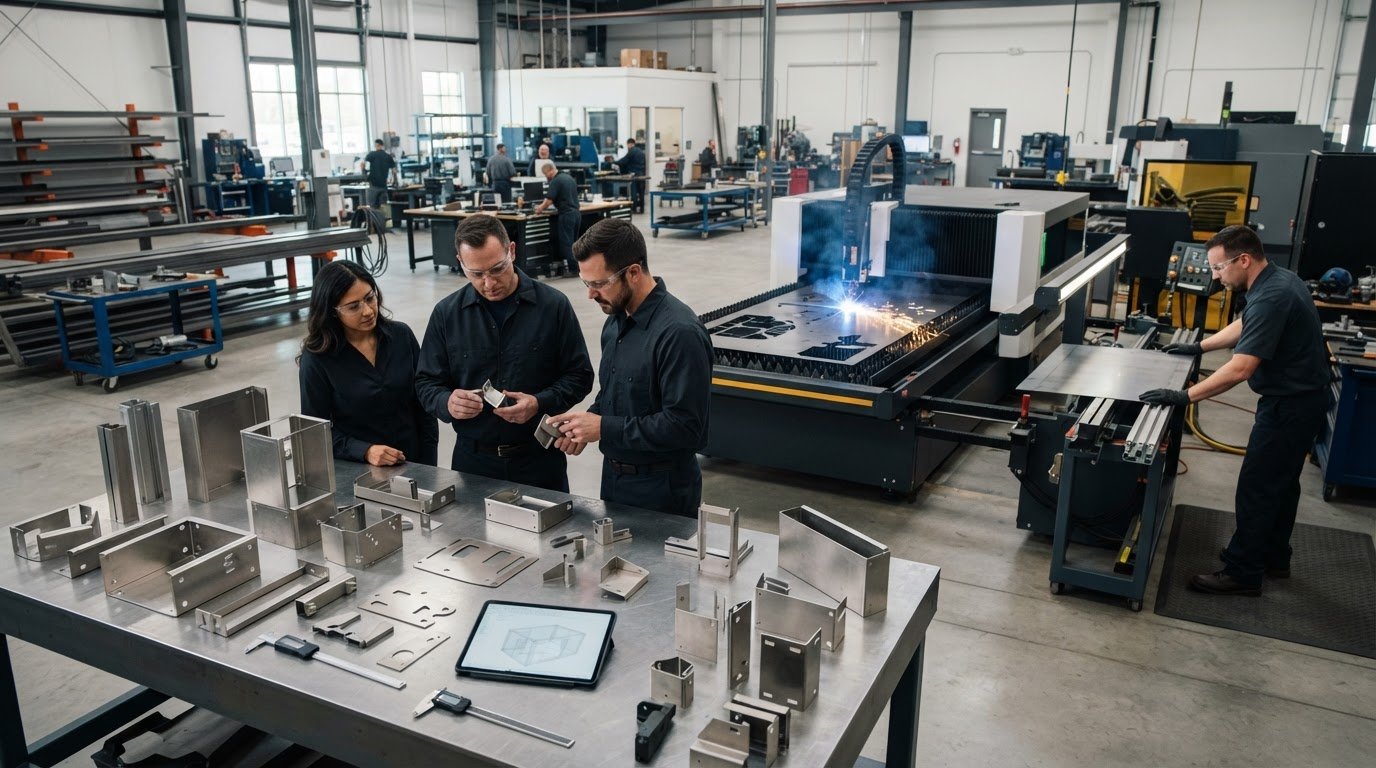
The cheapest-looking process for a small run can become the wrong choice when a part changes or another order arrives. Low volume sheet metal production works best when the manufacturing path fits the part’s geometry, revision pattern, and likely repeat batches.
A limited run does not have to mean inconsistent parts or avoidable rework. Start with clear drawings, controlled revisions, material requirements, and realistic quantity expectations. Then match the process to the design: custom laser cutting suits many flat profiles, while CNC press brake bending produces formed features. Some parts need both; others need only one.
This guide explains how to compare production paths, prepare design files and requirements, and weigh setup effort against the likelihood of repeat orders. It also covers how to assess a manufacturing partner for on-demand parts and consistent repeat production. Velocity Sheet Metal provides custom laser cutting, CNC press brake bending, HVAC ductwork, and BIM coordination for different project needs, and partners with national accounts that require standardized production practices. Start with the part’s requirements, then plan for what happens after the first run.
Key Takeaways
- Choose a production path based on part geometry, order pattern, and whether the work is a prototype, pilot run, or repeat batch.
- For low volume sheet metal production, process fit can matter more than choosing one method for every part.
- Define materials, revisions, quantities, and delivery requirements before fabrication to reduce avoidable rework.
- Compare cutting and forming methods by setup needs, design flexibility, and the consistency required for repeat orders.
- Custom laser cutting, CNC press brake bending, HVAC ductwork, and BIM coordination serve different project needs.
What Low Volume Sheet Metal Production Means for Your Project
Low-volume sheet metal production means fabricating a limited, project-defined quantity of usable parts, often in batches that may be repeated, rather than making a one-off part only to test a design. There is no universal quantity that separates low volume from high volume. The right category depends on what the parts must do, how often they are ordered, and whether production is exploratory, staged, or ongoing.
That context matters. A pilot batch has a different purpose from a prototype used to check dimensions or fit. A limited run might also bridge a design change, replace an unavailable component, or supply one phase of a larger build. Understanding the characteristics of sheet metal and how it is formed helps frame the choices, but the part’s intended use and order pattern guide the production plan.
How Low-Volume Runs Differ from Prototypes and High-Volume Production
A prototype is primarily a learning tool. It helps reveal whether a design fits, assembles, or performs as intended. A low-volume production part, by contrast, is made for its intended job, such as installation, assembly into a product, or sale. A pilot run sits between those stages: it produces a limited batch to test a process or prepare for wider demand.
High-volume production typically relies on ongoing output and sustained demand. Low-volume work may instead move in separate batches, with pauses between orders or design changes between revisions. Quantity alone does not determine the right route. A modest order of a complex formed part may need different planning from a larger batch of straightforward flat components. Geometry, material, repeat expectations, and the next production stage all matter.
When a Short Run Makes Sense
Short runs help match production to real project conditions. A company can launch a product in a pilot quantity, supply replacement parts without restarting broad production, or meet limited demand without committing to a continuous run. Construction and equipment projects may also release parts in phases, with each batch timed to a specific stage of the work.
Planned repeat orders can make this approach more practical. Rather than holding excess inventory for uncertain future demand, a buyer can plan another batch when the project or market calls for it. This works best when the part design and revision status are clear, and the expected order pattern is included in production planning.
For buyers considering low volume sheet metal production, on-demand part production is a useful model: parts are made in response to a defined need, whether that means a limited initial run or repeat batches over time. The goal is not simply to make fewer parts. It is to align the run with the part’s purpose, the project schedule, and its next production stage.
How the Sheet Metal Production Workflow Moves from Design to Parts
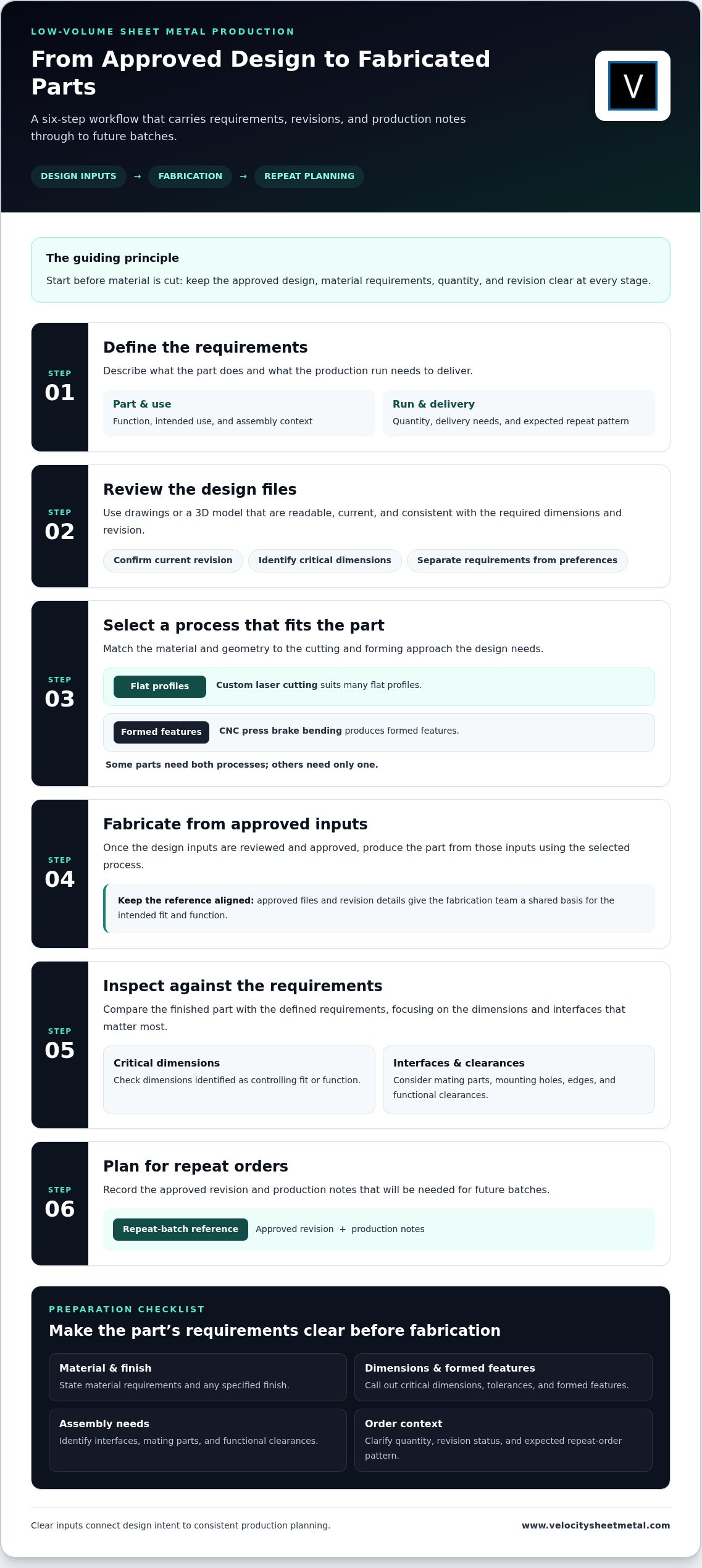
A predictable fabrication workflow starts before material is cut. In low volume sheet metal production, each input needs to carry through clearly, from the approved design to inspection and any planned repeat order. Complete, current design files give the fabrication team a shared reference and help keep parts aligned with the intended fit, function, and revision.
- Define requirements. State the part’s function, quantity, intended use, assembly context, and delivery needs.
- Review design files. Check that drawings or models are readable, current, and consistent with the required dimensions and revision.
- Select a process. Match the part’s material and geometry to a suitable cutting and forming approach.
- Fabricate. Produce the part from the approved design inputs.
- Inspect. Compare the finished part with the defined requirements, focusing on critical dimensions and interfaces.
- Plan repeat orders. Record the approved revision and production notes needed for future batches.
Each step informs the next. Material affects how a part can be cut and formed; geometry determines whether it needs flat features, bends, or both. Assembly needs matter too. A mounting hole, mating edge, or clearance feature may be more critical than a nonfunctional outer dimension. The Precision Metalforming Association provides background on metalforming processes and technologies that can help explain how design choices relate to fabrication methods.
What to Prepare Before Requesting Fabrication
Give the fabrication team a complete, usable picture of the part and its job. Start with drawings or a 3D model, identify the current revision, and state the intended application. Separate requirements that must be held from preferences that could change to suit fabrication.
- Material requirements and any specified finish.
- Critical dimensions, tolerances, and formed features.
- Assembly interfaces, mating parts, and functional clearances.
- Quantity, revision status, and expected repeat-order pattern.
If a dimension controls fit or function, identify it as critical. If a finish or feature is preferred but flexible, say so. That distinction directs attention to what the part must achieve and where there may be room to adjust the design.
From Reviewed Design to Fabricated Components
Once design inputs are reviewed and approved, the selected process turns them into physical components. Custom laser cutting may suit profiles and openings in flat sheet; CNC press brake bending may suit parts that need formed flanges or angles. These processes address different features, so let the part’s geometry guide the choice rather than assuming every component needs both.
For assemblies with multiple related components, BIM coordination can clarify how parts fit within the broader system before fabrication. This is especially useful when component relationships and project coordination affect the fabrication plan. To see how custom laser cutting and CNC press brake bending fit distinct fabrication needs, consider the features and interfaces your design calls for.
Comparing Low-Volume Sheet Metal Processes Without Losing Sight of Quality
Choose a process based on the part’s features, not a general preference for one machine. A flat panel with a custom outline presents a different production question from a bracket with repeated openings and formed flanges. In low volume sheet metal production, the right approach balances geometry, setup, revision flexibility, and the consistency needed across the current run and future batches.
Laser cutting
Geometry: Flat profiles, slots, and openings. Setup: The digital cut path guides the work. Revision flexibility: Useful when a profile or opening pattern changes between versions. Repeatability: Approved digital files provide a consistent reference for repeat parts.
Punching
Geometry: Suitable designs with repeated features such as holes or cutouts. Setup: Depends on the feature pattern and tooling approach. Revision flexibility: Changes to feature placement or design may affect setup. Repeatability: Consistent inputs and setup support repeated production.
Forming
Geometry: Parts requiring bends, flanges, or angles. Setup: Depends on the part’s bend sequence and geometry. Revision flexibility: A design change can affect how the part forms and fits. Repeatability: The approved design and consistent forming approach help maintain results across batches.
Laser Cutting, Punching, and Forming: What Each Contributes
Laser cutting creates the flat part outline and specified openings. Punching can suit designs with repeated features, though it is not automatically the best fit for every hole pattern or quantity. Forming follows flat-part operations when the design needs three-dimensional geometry. CNC press brake bending creates those bends, turning a cut blank into a bracket, channel, or other formed component. The Fabricator magazine covers sheet metal processes and fabrication practice, offering useful context for understanding how methods differ.
How to Assess Consistency Across a Short Run
Small runs can meet defined requirements when the process, design inputs, and inspection criteria align. Order size alone does not determine quality. Before production, identify which dimensions and features control fit or function, then define how they will be checked. A bracket, for example, may depend on hole location and bend position to align with its mating assembly.
Keep the revision consistent across the drawing, model, and production instructions. If a later batch uses a changed file, label and approve that revision rather than relying on memory or informal notes. This helps distinguish a production variation from a design update. For parts with bends, clear forming requirements matter; CNC press brake bending is relevant when the design calls for formed geometry.
Set acceptance criteria first, then choose a process that can produce and verify the required features. That gives the initial run and planned repeats a shared quality target. For project-specific cutting and forming needs, explore Velocity Sheet Metal’s fabrication capabilities.
How to Scope a Low-Volume Sheet Metal Order for Fewer Surprises
A clear order scope gives the fabrication team a usable target before work begins. For low volume sheet metal production, document more than what the part looks like. State what it must do, which details can change, and how the order may continue after the first batch. This handoff reduces ambiguity around design intent, inspection, and future revisions.
The Drawing and Specification Checklist
Gather the current design inputs and describe the part in terms of function, fabrication, and use. A 2D drawing can communicate dimensions and notes; a 3D model can help show formed geometry and assembly relationships. Make sure each file identifies the same approved revision.
- Design files: Include current drawings or models, revision identifiers, and supporting notes.
- Material and finish: State required material and finish, distinguishing firm requirements from preferences.
- Critical features: Call out dimensions, formed features, openings, edges, or interfaces that affect fit or function.
- Assembly context: Identify mating parts, installation orientation, and clearances the component must maintain.
- Order pattern: Give the quantity for the first batch and the expected repeat pattern, if known.
- Delivery requirements: Describe the destination and any project milestones that affect when parts are needed.
Use the scope to separate fixed requirements from adjustable design choices. For example, a mounting pattern that must align with an existing assembly is a constraint. A nonfunctional edge detail may be a preference. Labeling the distinction helps technical review focus on what cannot change while leaving room to consider practical alternatives.
Have a limited-run project to scope? Share your part requirements with Velocity Sheet Metal to start with the relevant design and order details.
Planning Revisions, Batches, and Delivery
Decide who owns the approved design and how changes are communicated. Keep a record of the released drawing or model, its revision identifier, and the date it became current. If the design changes, clearly mark the new revision and replace outdated production files. Do not rely on email descriptions or memory to signal a change that affects dimensions, material, or forming.
Separate the confirmed first order from future demand. Record the initial batch quantity, then note whether additional batches are likely, conditional, or only a forecast. This gives production planning useful context without treating an estimate as a fixed commitment. It also helps teams distinguish a repeat of the approved part from a new order that includes a design revision.
For ductwork applications, include the system context and coordination information that affects how components relate to the broader mechanical project. HVAC duct fabrication for mechanical contractors depends on clear project inputs and coordinated requirements, especially when work is released in phases. For any part type, a disciplined scope links the approved design to the batch being made and gives future orders a clear reference.
How Velocity Sheet Metal Supports Low-Volume Production Needs
Low-volume work needs more than equipment that can make the part. It needs a fabrication approach that fits the design and an order plan for the first batch and potential repeats. Velocity Sheet Metal provides on-demand part production for limited runs and repeatable batches, connecting project requirements to relevant fabrication and coordination capabilities.
Matching Velocity Capabilities to the Part
Start with the part’s features and application. Custom laser cutting supports sheet metal components that need specific profiles or openings. If the design includes flanges, angles, or other formed geometry, CNC press brake bending can address those features. These processes serve different needs, so choose based on the component rather than assuming every order uses the same route.
For mechanical projects, Velocity’s HVAC offerings include coil-line automated rectangular duct, spiral and round duct and fittings, and curb adapters. BIM coordination and spool drawings support projects where digital coordination helps clarify how system components relate before fabrication. These capabilities are suited to ductwork and coordinated mechanical work, rather than every standalone sheet metal part.
Moving from Project Scope to a Production Conversation
A focused project handoff turns a drawing or project idea into a clear production discussion. Bring together the information that defines the part, its purpose, and its order pattern:
- Current drawings or models, with the active revision identified.
- Material, finish, critical dimensions, and features that affect fit or function.
- Part quantity for the initial run and any expected repeat batches.
- Assembly interfaces, application details, and delivery requirements.
- Any distinction between fixed specifications and preferences that could be adjusted.
That information gives the team a practical basis for matching capabilities to the project. If the design changes later, clear revision ownership and an approved current file help keep the next order aligned with the intended part. For ductwork projects, BIM coordination can connect fabrication planning to the broader system design.
Velocity Sheet Metal ships nationwide and partners with national accounts that need standardized production practices across projects. This is relevant when repeat orders need to follow consistent project inputs. The management team brings more than 50 years of combined industry experience, supporting an understanding of fabrication requirements from digital design through production.
Whether you are planning an initial limited run or mapping out repeat batches, bring the part files, requirements, quantities, and revision status into the conversation. Explore Velocity Sheet Metal's fabrication capabilities and share your project needs to identify a suitable path from design to fabricated parts.
Set Up the Next Production Step
A well-planned first run can do more than meet an immediate need. It can establish a baseline for future production: what worked in the design, which requirements proved essential, and what should stay consistent if another batch is needed. Capture those lessons while the project is active. Clear decisions now make it easier to carry the part forward without losing sight of its intended use.
Next, turn the production plan into a practical fabrication conversation. Consider how the part fits the wider project, what needs to stay fixed, and how future demand could affect order planning. A suitable fabrication path should reflect those priorities and the part’s specific requirements.
Velocity Sheet Metal brings fabrication and coordination capabilities together for projects that need a defined path from design to parts. Explore the options and identify a practical starting point for your project: Explore Velocity Sheet Metal's fabrication capabilities.
With a clear plan in place, your next production step can move forward with purpose.
Frequently Asked Questions
What is considered low-volume sheet metal production?
Low-volume sheet metal production describes a run made for a particular project stage or order pattern, not a universal part count. A small batch intended for equipment assembly or sale is production work, while a single component made mainly to check a design is usually a prototype. For example, intermittent replacement-part demand may call for limited batches even when orders recur over time.
Is low-volume sheet metal production suitable for repeat orders?
Yes. Repeat orders can use the same approved design across separate batches, provided the requirements remain stable. Keep one released revision as the production reference, and document changes before making a new batch. For example, a buyer who changes a mounting-hole location should treat that as a revision, not an informal adjustment to the previous order. This helps align repeat production with the intended part.
Can low-volume sheet metal parts meet production quality requirements?
They can be produced to defined requirements when the chosen process suits the part and acceptance criteria are clear. Identify what matters for function, such as hole locations, overall dimensions, or bend angles, and specify how those features will be checked. A short run does not establish quality by itself, and inspection cannot resolve unclear requirements. The design, fabrication approach, and inspection plan need to work together.
Which sheet metal fabrication process is best for a small production run?
There is no single best process for every small run. Start with the material and geometry, then identify the features that drive fabrication. A flat profile with openings may suit laser cutting; repeated features may make punching relevant; bends may call for forming after the flat blank is made. Also consider whether the design may change and how closely later batches must match the first.
How should I prepare files for a low-volume sheet metal production quote?
Send the current drawing or model and make the revision easy to identify. Include the specified material and finish, plus critical dimensions and features that affect fit or function. Check that the drawing and model do not show conflicting geometry. Call out any especially important dimensions clearly. Include the first-batch quantity and note whether you expect additional orders.
Can a low-volume sheet metal project move into larger production later?
It can, but the first run does not automatically define the best route for larger output. Before scaling, review whether the design is stable, whether the fabrication process remains suitable, and whether future demand supports a different production setup. Use feedback from initial parts to resolve design issues, then carry the approved revision and inspection criteria forward. A larger run may require fresh process planning.
What information affects the cost of low-volume sheet metal production?
Cost depends on the project specifications and the work required to make and verify each part. Relevant variables include material type and thickness, part size, geometry, number of bends or cut features, finish, setup needs, inspection requirements, and batch quantity. Drawing changes can also affect planning. Providing complete, consistent inputs helps a fabricator assess the work without relying on assumptions or incomplete details.