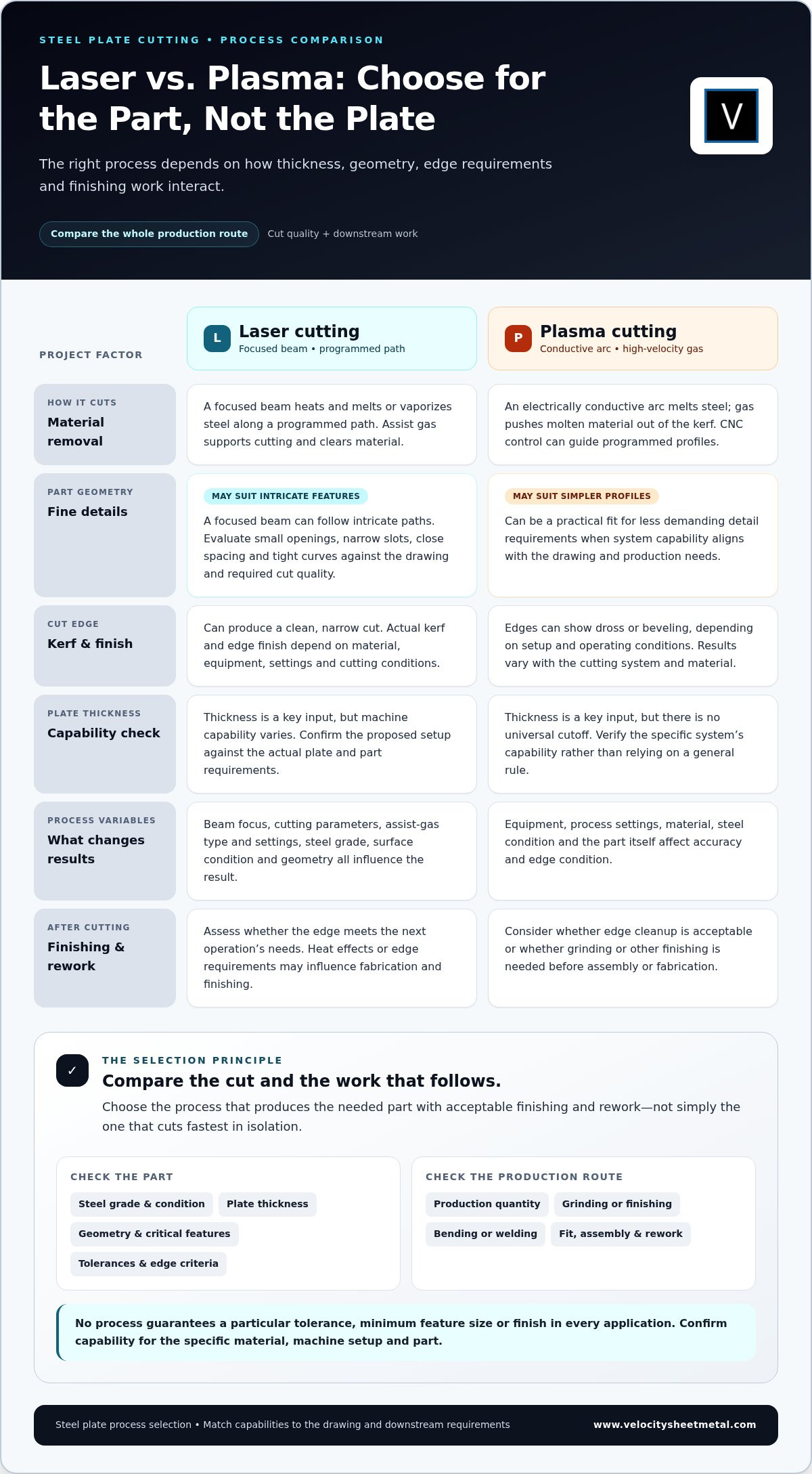
Laser Cutting vs. Plasma Cutting for Steel Plate: How to Choose
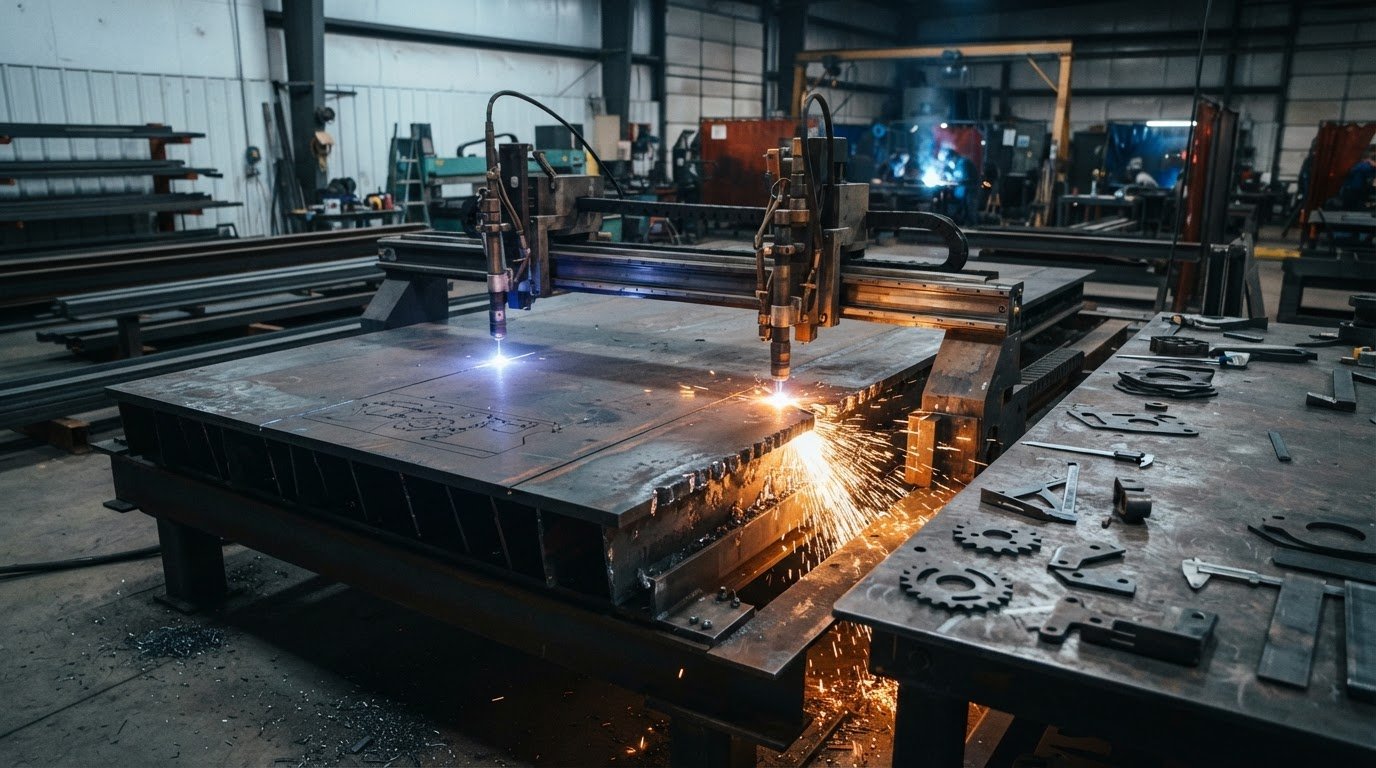
The thickest plate doesn’t automatically call for plasma, and the most precise part doesn’t always need a laser. In laser cutting vs plasma cutting for steel plate, the right choice depends on how thickness, geometry, edge quality, and finishing work interact.
If you’re weighing the two processes, you’re likely balancing more than cutting speed. A rough edge can add grinding time, while heat effects or limited precision can create rework downstream. This guide compares the practical strengths and trade-offs of laser and plasma cutting so you can match the process to your part and production priorities.
You’ll see how plate thickness and part geometry influence the decision, where cut quality matters most, and why the total work required after cutting belongs in the calculation. You’ll also learn what information to include in a project brief, from material and thickness to part details and edge requirements. When the job favors laser processing, complete design information helps move custom laser-cut parts from file to production with fewer avoidable delays.
Key Takeaways
- In laser cutting vs plasma cutting for steel plate, choose based on the part’s requirements rather than assuming one process is always better.
- Consider how material condition, plate thickness, geometry, and machine setup can affect edge finish and fine details.
- Compare the cut itself and the work that follows, including any grinding, bending, welding, or finishing.
- Build a clear project brief with material, thickness, geometry, edge criteria, and production quantity.
- Complete drawings and specifications help move custom laser-cut parts from design files into production.
Laser vs. plasma cutting for steel plate: what the comparison actually means
The practical question in laser cutting vs plasma cutting for steel plate isn’t which process wins in every situation. Both use heat to separate electrically conductive steel, but they deliver that heat differently. A laser focuses a beam along a programmed path; plasma uses an electrically conductive arc to melt metal and a high-velocity gas stream to expel it.
That difference affects both the cut and the work that follows. A useful comparison considers edge quality, kerf width, heat effects, part geometry, plate thickness, production priorities, and any post-cut grinding or finishing. Results also depend on the steel, machine configuration, and process settings, so a general rule can’t replace the requirements of the actual part.
How laser cutting removes steel
A laser cutting system directs a focused beam onto the steel, heating and melting or vaporizing material along a programmed path. Assist gas flows through the cutting head to support the process and clear material from the cut. The gas type and settings depend on the material, equipment, and desired result. Beam focus, cutting parameters, and part geometry all influence the finished edge and detail.
For a plate part with small openings, tight contours, or fine features, evaluate whether the proposed cut quality meets the drawing and downstream requirements. Laser results aren’t determined by the beam alone; material grade, surface condition, machine setup, and the required edge all matter.
How plasma cutting removes steel
Plasma cutting forms an electrically conductive arc that creates a high-temperature plasma. The arc melts the steel, while gas pushes molten material out of the kerf. The plasma arc cutting process describes this fundamental approach. CNC control can guide the torch along programmed coordinates to produce repeatable profiles, though the result still depends on the cutting system and its setup.
The process principle alone doesn’t specify the accuracy, edge condition, or thickness range of every plasma system. Those outcomes vary with equipment, settings, material, and the part itself.
Use the process comparison to frame the job, not to declare a universal winner. An intricate profile with closely spaced features, for example, places different demands on the cut than a simpler outline. A part that will be welded or finished may also have different edge criteria from one used as-cut. Thickness is a key input, but machine capability varies, so avoid treating a single cutoff value as universal.
To select a process, compare the drawing and steel condition with the required tolerances, edge expectations, production quantity, and downstream operations. The right fit is the process that produces the needed part with acceptable finishing and rework, not simply the one that cuts fastest in isolation.
How laser and plasma cutting affect steel plate edges and part details
The cut edge is only one part of the decision. Kerf, heat effects, and feature quality influence whether a part moves directly to assembly or needs additional work. In laser cutting vs plasma cutting for steel plate, results depend on the machine and setup as well as the process. Steel grade, surface condition, plate thickness, and geometry all influence how consistently the cut follows the drawing.
Edge quality, kerf, and heat-affected areas
Kerf is the width of material removed as the tool cuts through the plate. A narrower kerf can help preserve small features and tight spacing, but actual kerf depends on the equipment, settings, material, and cutting conditions. Heat also affects the cut edge and the nearby heat-affected area. Excessive or poorly controlled heat can influence edge appearance and may matter for later fabrication.
Plasma edges can show dross or beveling, depending on setup and operating conditions. Laser cutting can produce a clean, narrow cut, but that outcome also depends on material and process parameters. Neither process guarantees a particular finish in every application. The American Welding Society comparison provides further context on differences such as kerf and cut-edge finish.
Small features, holes, and complex profiles
Fine geometry puts more demands on the cut. Small openings, narrow slots, close spacing, and tight curves leave less room for kerf and heat variation. Laser cutting may suit these features because the focused beam can follow intricate programmed paths. Plasma can be a practical fit for plate parts with simpler profiles or less demanding detail requirements when its capabilities align with the drawing and production needs.
Check the drawing, not just the overall shape. Identify critical hole sizes, slot widths, edge-to-feature distances, and dimensions that affect fit or assembly. Then account for steel grade, plate condition, thickness, and cutting-system setup. Avoid assuming a process can hold a specific tolerance or produce a minimum feature size without verified capability data.
Downstream work matters, too. A part destined for welding, bending, or a visible finished edge may need different edge criteria from a part where minor cleanup is acceptable. Include those requirements in the project information so the cut can be assessed as part of the full fabrication sequence. For projects where laser processing fits the design, custom laser cutting can take a part from its drawing to production.
Laser vs. plasma cutting for steel plate: compare the right project factors
A useful decision weighs the whole production route, not just a machine’s headline cutting speed. Plate thickness matters, but equipment capability, edge requirements, part geometry, setup, handling, and cleanup all affect the finished result. The American Welding Society comparison also examines how the technologies differ in areas such as thickness and productivity. Use the table as a starting point, then match the process to the actual part drawing and production plan.
| Project factor | Laser may fit when… | Plasma may fit when… |
|---|---|---|
| Edge needs | The part calls for a controlled edge or reduced cleanup, subject to equipment and setup. | The specified edge condition can accommodate the results of the selected plasma system. |
| Detail | Small features, close spacing, or fine contours are important to the design. | The part’s features suit the system’s cutting capability and required detail. |
| Geometry | Complex profiles need accurate, programmed paths. | The profile and its geometry align with the system and process setup. |
| Thickness | The plate falls within the laser system’s effective operating range for the material and cut requirements. | The plate thickness and required cut quality align with the plasma system’s capability. |
| Production and finishing | Repeatable profiles and reduced secondary work support the overall production plan. | Cutting pace and process strengths suit the job, including any planned finishing or beveling. |
Thickness is a key variable, but there’s no universal cutoff that applies to every machine. Compare the specific plate grade and thickness with the system’s performance for the required edge and geometry. Also separate cutting speed from total production efficiency: loading, setup, part handling, inspection, and rework can all affect how quickly acceptable parts are ready for the next operation.
When laser cutting may fit the job
Laser may be a strong fit when fine details, narrow kerf, or edge quality are priorities. Programmed paths can support repeatable profiles across a run, provided the machine, material, and settings suit the design. It isn’t automatically faster or better for every plate. Judge it against the part’s critical dimensions and required finishing.
When plasma cutting may fit the job
Plasma may suit a plate job when its thickness, profile, and acceptable edge condition align with the selected equipment. Beveling and other process applications may also be relevant, depending on the system and part requirements. Compare these capabilities with the drawing and the work that follows cutting.
In short, laser cutting vs plasma cutting for steel plate is a project-specific decision. Let material and part requirements lead; treat speed or thickness claims as useful only when they reflect the actual equipment and full production sequence.
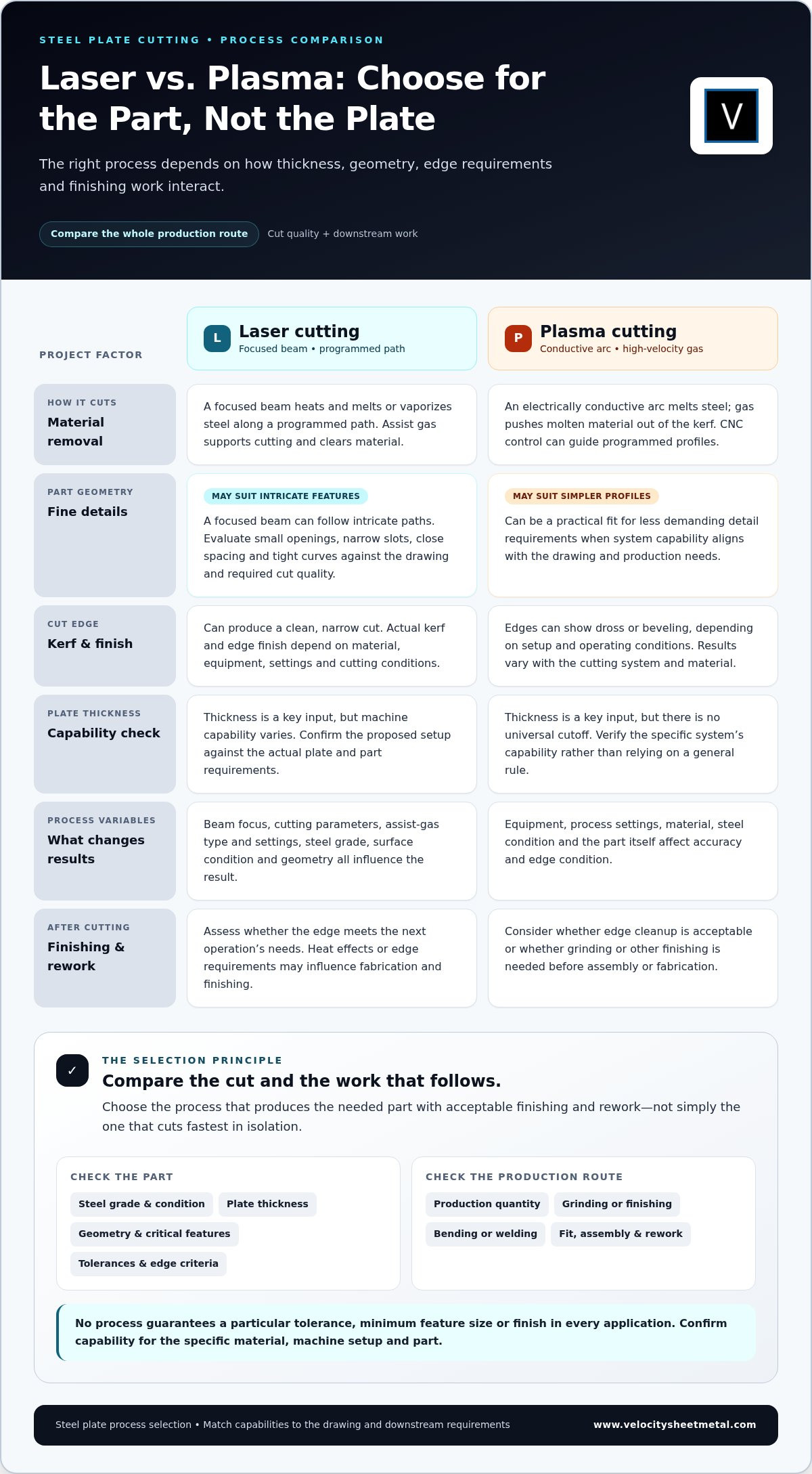
Choose a cutting process with a steel plate project checklist
A clear project brief turns process selection into a technical decision. For laser cutting vs plasma cutting for steel plate, document five inputs before comparing workflows: material, thickness, geometry, edge criteria, and production quantity. These details clarify what matters to the part and which machine capabilities need review.
Build a production-ready part brief
Start with the material grade, nominal thickness, required quantity, and current revision-controlled drawing. Mark critical dimensions, holes, slots, contours, and edge expectations. Then describe what happens after cutting, such as bending, welding, assembly, or finishing. That downstream context can reveal process mismatches before they become rework.
For broader laser process considerations, see precision laser cutting services.
- Material: Record the steel grade and relevant surface or plate-condition details.
- Thickness: Specify nominal thickness and any known variation that affects the part.
- Geometry: Identify complex profiles, close spacing, holes, and other critical features.
- Edge criteria: State where edge finish, bevel, or cleanup requirements matter.
- Production quantity: Give the run quantity and note whether repeat orders are expected.
Use a side-by-side review to connect those inputs to process considerations. It’s a screening tool, not a substitute for validating actual machine capacity and process parameters against the part.
| Project priority | Laser considerations | Plasma considerations |
|---|---|---|
| Fine details or close feature spacing | Review suitability for the drawing’s detail and edge requirements. | Compare feature demands with the selected system’s capability. |
| Plate thickness | Validate thickness, material, and required cut quality against the machine. | Validate the same factors against plasma equipment and setup. |
| Edge and downstream work | Assess required finish and any later bending, welding, or finishing. | Include edge expectations and possible cleanup in the workflow. |
| Quantity and repeatability | Consider programmed profiles, setup, handling, and repeat production. | Compare programmed production and handling with the job’s priorities. |
Compare process fit before committing to a workflow
Flag missing tolerances, unclear edge notes, and unspecified material details for technical review rather than guessing at machine limits. If the part will be formed after cutting, include bend locations and related requirements in the brief. Explore CNC press brake services for OEMs for downstream forming context.
Have a project-ready drawing and specifications? Explore custom laser cutting for parts that fit laser processing.
From steel plate drawing to custom laser-cut parts with Velocity Sheet Metal
Once the project requirements point to laser processing, the next step is a production-ready handoff. Velocity Sheet Metal provides custom laser cutting and on-demand part production, working from project files and specifications to produce cut parts. A clear brief helps align the drawing, material, quantity, and edge requirements before production begins. The choice in laser cutting vs plasma cutting for steel plate still depends on the part; laser cutting is the relevant route when the project requirements suit that process.
What to include when requesting custom laser-cut parts
Send current drawing files and identify the material, thickness, quantity, and drawing revision. Mark features that affect fit or assembly, along with required edge conditions and any finishing expectations. If the part will be bent, welded, or assembled with other components, include those steps in the project information. A hole location that interfaces with another part, for example, may be more critical than a nonfunctional outside edge.
- Current part files and revision details
- Material grade, thickness, and production quantity
- Critical dimensions, holes, slots, and profile details
- Edge criteria and any finishing requirements
- Downstream bending, welding, or assembly needs
Keep the brief factual. State the required result rather than assuming a tolerance, minimum feature size, or machine limit. Clear specifications give the production handoff a usable basis and help avoid mismatches between the cut part and its next fabrication step.
Move from process comparison to production
Use the material, thickness, geometry, edge criteria, and quantity together to decide whether laser processing aligns with the part. Those inputs also inform technical review of the drawing and process parameters. No single headline specification can replace that project-level assessment.
Velocity Sheet Metal supports projects with custom laser cutting and on-demand part production, with nationwide shipping. From design file to cut part, a complete brief helps keep the requirements visible through the handoff. Share your drawing and project details through Velocity Sheet Metal’s website to start a discussion about your part requirements.
Turn your steel plate requirements into a production-ready plan
The right choice in laser cutting vs plasma cutting for steel plate comes down to the part: its material and thickness, geometry, required edge quality, production quantity, and any work that follows cutting. Compare those requirements together, and account for handling and finishing as well as cutting performance.
When laser processing fits the job, a clear drawing and complete specifications help move the project from design to production. Velocity Sheet Metal provides custom laser cutting and on-demand part production, backed by a management team with more than 50 years of combined industry experience. Nationwide shipping supports projects across the country.
Bring your current drawing, material and thickness details, quantity, critical dimensions, and downstream fabrication needs. Discuss your steel plate part requirements with Velocity Sheet Metal and take the next step toward a practical production plan. A well-defined brief gives your project a strong starting point.
Frequently Asked Questions
Can laser cutting cut steel plate?
Yes, laser cutting can cut steel plate when the material and laser system’s capabilities align with the required cut. A focused beam heats the steel along a programmed path, while assist gas helps clear material from the kerf. Suitability depends on grade, thickness, geometry, edge expectations, and machine setup. Compare those factors with the actual part drawing rather than relying on a general thickness claim.
Which is better for steel plate, laser cutting or plasma cutting?
Neither process is universally better for steel plate. In laser cutting vs plasma cutting for steel plate, compare thickness with the system’s capabilities, then weigh edge requirements, fine details, geometry, production quantity, and post-cut work. Laser may suit parts that prioritize intricate features or a controlled edge. Plasma may fit when its equipment and cut quality align with the plate and part requirements. Judge the full workflow, not one specification.
How thick of a steel plate can a laser cut?
There isn’t one thickness limit that applies to every laser cutting system. The practical range varies with the laser’s capabilities, steel grade, required edge quality, and process setup. A thickness that suits one machine or cutting condition may not suit another. To assess a part, provide its material and nominal thickness along with the drawing and edge criteria, then evaluate those details against the specific system and process parameters.
Does laser cutting produce a cleaner edge than plasma cutting?
Laser cutting can produce a narrow cut and a clean edge, while plasma-cut edges may show bevel or dross depending on the process. That isn’t a guaranteed ranking for every part. Equipment, material condition, thickness, settings, and the required finish all influence the result. Define what “clean” means for the application, such as acceptable edge appearance or preparation for welding, and include any cleanup needs in the production plan.
What happens to steel near the cut edge?
Cutting heat can change the steel at the edge and in a nearby region called the heat-affected area. The extent and practical effect depend on the process, heat input, material, thickness, and operating conditions. This area may matter if the part has demanding fit, weld, or finishing requirements. It doesn’t mean every cut part needs extra finishing. Specify critical edge conditions and downstream work so they inform process selection.
Can plasma cutting make precise holes in steel plate?
Plasma cutting can produce holes in steel plate, but whether they meet a part’s requirements depends on hole geometry, material and thickness, equipment, setup, and required dimensions. A small hole or a hole with a tight dimensional requirement may call for closer review than a less critical opening. Show hole sizes, locations, and tolerances on the drawing, then compare the required result with the capability of the cutting system.
How do I choose between laser and plasma cutting for a steel plate part?
Start with a concise checklist: identify the steel grade and thickness, review the part geometry and fine features, define edge-quality criteria, and note production quantity. Then document downstream bending, welding, assembly, or finishing requirements. Compare these needs with the specific machine’s capabilities and process parameters. Don’t select by thickness or speed alone. A complete, revision-controlled drawing helps evaluate cut quality, handling, and any work required after cutting.