Large Scale Ductwork Production: A Guide to High-Volume HVAC Manufacturing in 2026
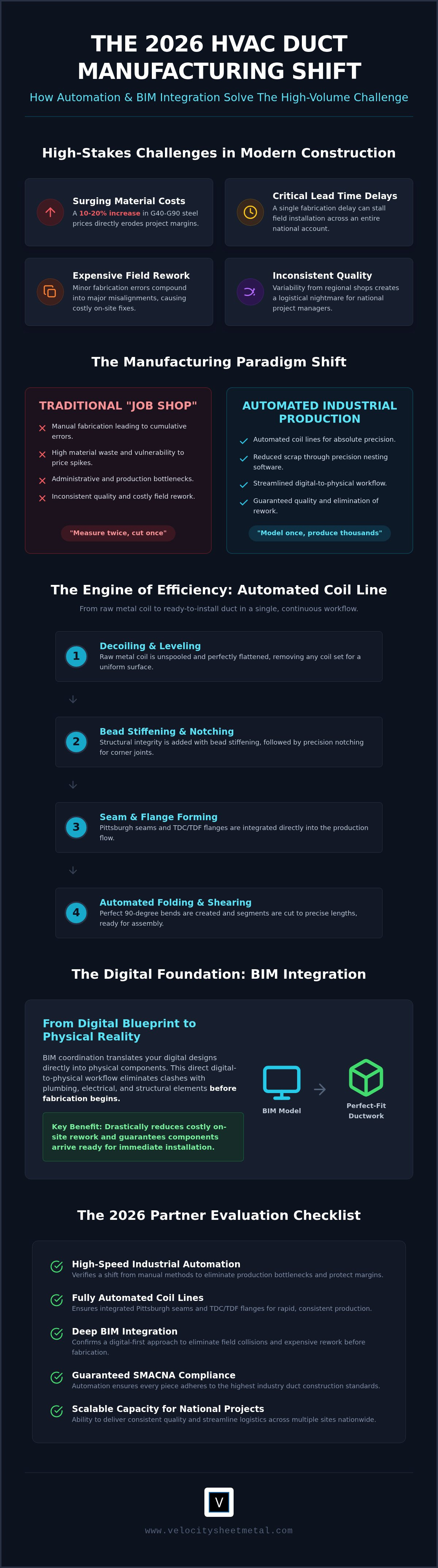
In 2026, a 10 percent surge in steel prices and the mandatory transition to lower-GWP refrigerants have turned high-volume HVAC duct manufacturing into a high-stakes race for efficiency. You've likely seen how a single lead time delay or a minor fabrication error can stall field installation across an entire national account. It's a common pain point: BIM model clashes lead to expensive field rework, and inconsistent quality from regional shops creates a logistical nightmare for project managers. You need a partner who treats your timeline with the same urgency as your technical specifications.
We understand that your project's success depends on precision and speed. This guide explores how automated coil-line production and deep BIM integration solve these traditional industrial problems. You'll discover how a direct digital-to-physical manufacturing workflow ensures consistent quality from the first fitting to the last. We'll preview the technology behind precision laser cutting and CNC bending that allows for scalable production without the typical administrative delays. It's time to bridge the gap between your digital design and a tangible, high-performance product that arrives on site ready for immediate installation.
Key Takeaways
- Eliminate lead time delays and protect project margins by shifting from manual "job shop" methods to high-speed industrial automation.
- Understand how automated coil lines integrate Pittsburgh seams and TDC/TDF flanges to accelerate the production of rectangular duct segments.
- Reduce field rework through BIM coordination, ensuring digital designs translate to physical components without costly on-site collisions.
- Evaluate potential partners for high-volume HVAC duct manufacturing using a rigorous 2026 checklist for capacity and SMACNA compliance.
- Streamline national project logistics by leveraging a direct digital-to-physical workflow that guarantees consistent quality from the factory to the field.
The Challenges of Large Scale Ductwork Production in Commercial Construction
Traditional "job shop" methods aren't built for the scale of 2026 commercial projects. When you're managing a national account, you can't afford the variability that comes with manual fabrication. Mechanical contractors often see their profit margins vanish due to lead time delays and material price spikes. With steel costs increasing by up to 20 percent for G40 to G90 grades this year, every wasted inch of metal or hour of field labor is a direct hit to your bottom line. Relying on shops that lack automated infrastructure is a gamble that rarely pays off on high-volume HVAC duct manufacturing contracts.
Quality inconsistencies represent a massive risk in large scale installations. On a massive project, a quarter-inch error in a single segment might seem small. By the time your crew has installed fifty segments, that error has compounded into a multi-inch misalignment. This forces expensive field rework and triggers clashes with plumbing or electrical runs. Without a coordinated digital-to-physical workflow, you're essentially guessing in the field. You need a partner who bridges the gap between a BIM file and a tangible product with absolute precision.
The Volume vs. Precision Paradox
Manual measurements in mass production create a cumulative error that stalls field installation. Every time a fabricator picks up a tape measure, there's a chance for a slight deviation. On a large scale project, these deviations add up quickly. The hidden costs of field modifications don't just include extra labor. They include wasted materials and the total disruption of the site schedule. This is why engineers are shifting toward digital-first fabrication partners. They demand the certainty that what's in the model is exactly what arrives on the truck. It's about moving from a "measure twice, cut once" manual mindset to a "model once, produce thousands" industrial reality.
Meeting Tight Timelines with Scalable Manufacturing
Automated workflows eliminate the administrative and production bottlenecks that plague traditional shops. From the initial digital input to the final logistics of delivery, the process must be streamlined and methodical. High-volume HVAC duct manufacturing is a technology-driven process that utilizes automation and digital coordination to produce large quantities of HVAC ductwork with surgical accuracy. These standardized production standards benefit national accounts that require uniform quality across multiple sites. By removing manual steps, you reduce the time from design to delivery. This keeps your field crews productive and your project on schedule. It's a pragmatic approach to modern construction that values speed as much as technical capability.
Automated Coil Line Production: The Engine of High-Volume Manufacturing
Speed defines the modern commercial job site. High-volume HVAC duct manufacturing requires more than just manual labor; it demands a fully automated coil line. These systems transform massive raw metal coils into finished rectangular duct segments in a single, continuous motion. By integrating Pittsburgh seams and TDC/TDF flanges directly into the production flow, we eliminate the secondary handling that slows down traditional shops. This is precision at scale. It's the essential bridge between a digital file and a tangible product.
With steel prices volatile in 2026, reducing scrap is a financial necessity for any mechanical contractor. Automated shearing and precision nesting software ensure that every inch of a coil is utilized. This level of material control allows for consistent gauge monitoring across the entire production run. It ensures every piece adheres to the latest SMACNA duct construction standards without the risk of manual error. No measurement mistakes. No wasted metal. No administrative delays.
The Mechanics of a High-Speed Coil Line
The process is a masterpiece of industrial synchronization. It begins with decoiling and leveling. Here, the metal is flattened to remove any coil set. From there, the machine performs bead stiffening to add structural integrity and precision notching for corner joints. Finally, the automated folder creates perfect 90-degree bends. This sequence ensures airtight seams and structural rigidity, even for heavy-gauge galvanized steel used in industrial applications. If you need to scale your project immediately, you can partner with an expert operator who manages these technical details for you.
Rectangular vs. Spiral Efficiency in Mass Production
Choosing between spiral ducting and rectangular lines often depends on the specific application. Spiral is efficient for long, straight runs, but rectangular coil lines are the clear winner for high-volume plenum and trunk lines. Rectangular duct offers a major logistical advantage: "knocked-down" shipping. We can ship flat-packed duct segments across the country. This significantly reduces freight costs and saves valuable storage space on site. It allows national accounts to maintain a direct digital-to-physical manufacturing workflow while keeping logistics lean. It's the most methodical way to approach high-volume HVAC duct manufacturing, moving from a digital model to a physical installation.
BIM Coordination: Eliminating Field Collisions Before Fabrication
In high-volume HVAC duct manufacturing, the most expensive mistake is a collision discovered forty feet in the air. Traditional construction often relies on field measurements that lead to "stop-and-start" installation cycles. This is a luxury that 2026 project timelines don't allow. Building Information Modeling (BIM) has moved from a design preference to a manufacturing requirement. It provides the essential bridge between a digital concept and a physical product, allowing us to identify and resolve conflicts before a single piece of steel is cut.
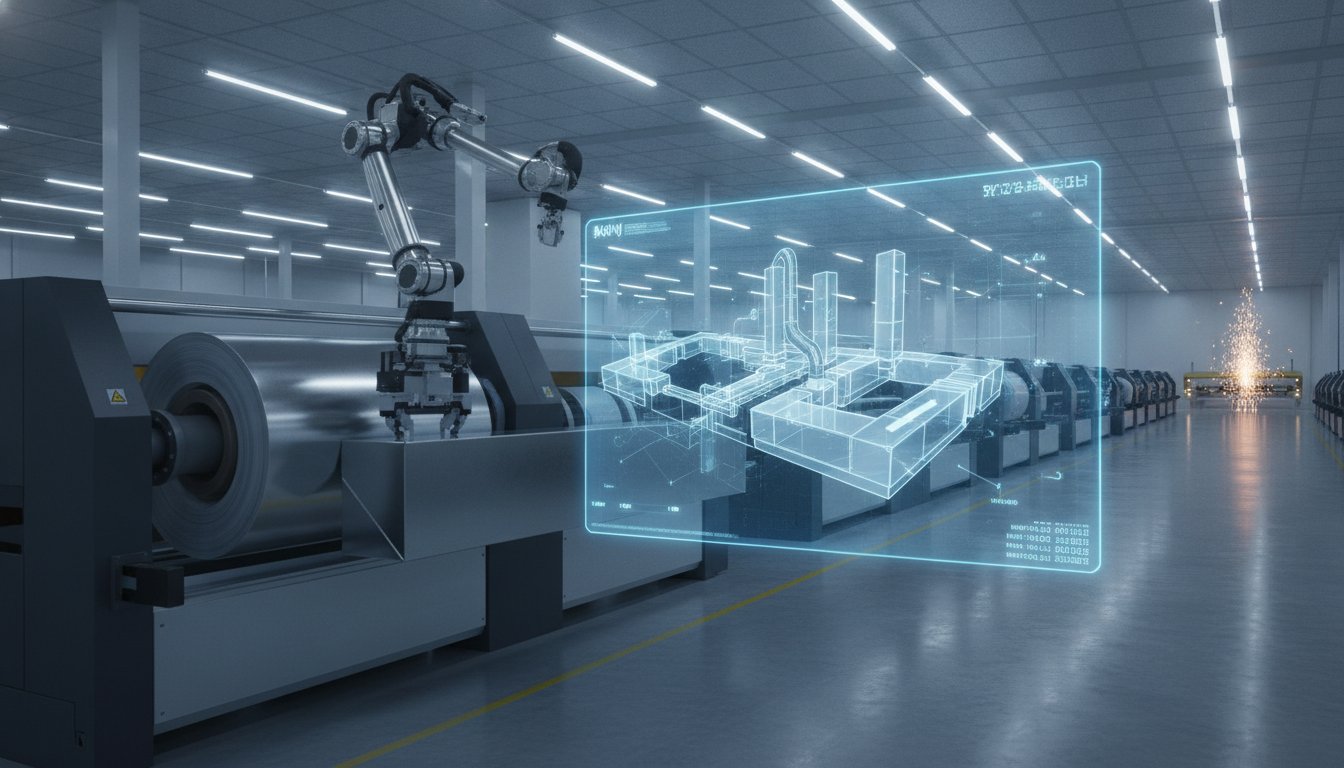
The primary value of this digital-first approach is BIM clash detection for HVAC fabrication. By running automated clash reports against structural, electrical, and plumbing models, we eliminate field re-fabrication. We don't just find the problem; we solve it in the model. This creates a "Digital Twin" of the project, ensuring the physical ductwork matches the digital design with surgical precision. When you're managing a national commercial account, this level of certainty protects your margins and prevents the administrative delays that stall field crews.
Mechanical Spooling and Precision Spool Drawings
Spooling is the process of breaking down complex duct systems into manageable, shop-ready segments. We transform 3D models into accurate mechanical spool drawings that dictate exactly how the shop floor operates. Each segment is assigned a unique tag and label, creating a logical progression for on-site assembly. This methodical approach extends to complex components, where we integrate laser cutting for high-pressure HVAC duct fittings directly from the BIM data. From transitions to offsets, every fitting is produced with the same accuracy as the straight runs.
The Workflow: From Model to Machine
The transition from design intent to physical product must be seamless. We use Revit and CADmep data to drive our automated CNC machinery, significantly reducing the potential for human error. This direct digital-to-physical manufacturing workflow ensures that every fold, notch, and flange is executed according to the coordinated model. BIM coordination acts as the insurance policy for high-volume production, ensuring that every piece of ductwork fits perfectly the first time it's hoisted into the ceiling. It's a pragmatic, tech-savvy solution to a traditional industrial problem, positioning your project for speed and reliability from the first shipment to the final inspection.
Evaluating a National Manufacturing Partner: A MOFU Checklist
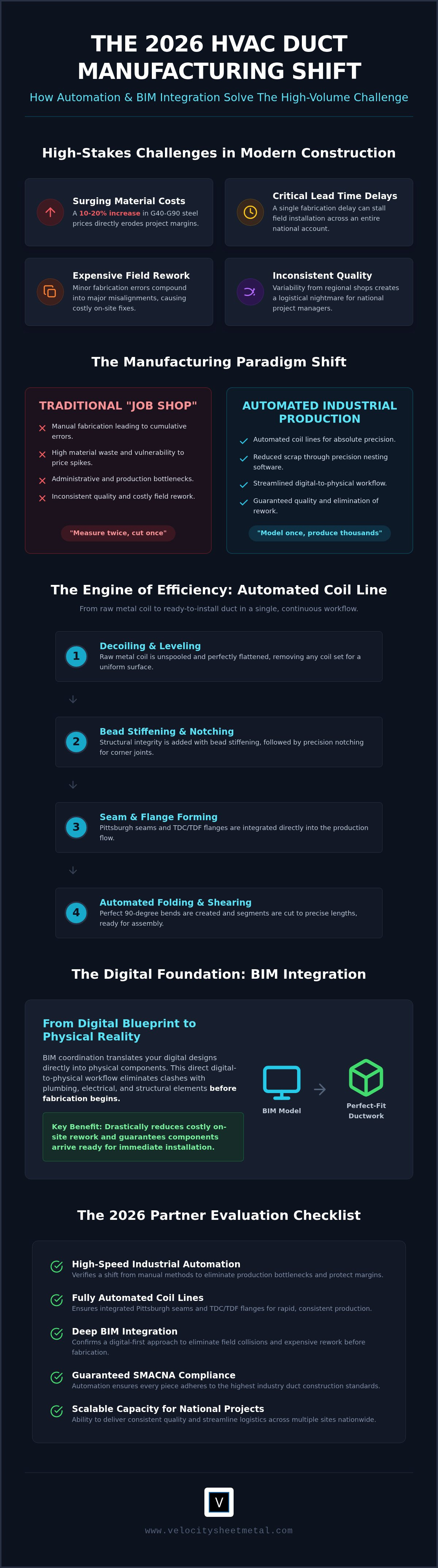
Choosing a partner for high-volume HVAC duct manufacturing requires a shift in perspective. You aren't just buying metal. You're buying a production slot in a high-speed, automated workflow. Vetting a manufacturer involves more than comparing price sheets; it requires a deep dive into their industrial capacity and logistical reach. If a shop can't handle a baseline of 50,000 lbs of duct per week, they aren't a high-volume manufacturer. They're a job shop trying to scale up on your project's timeline. You need the certainty of a partner who acts as the essential bridge between your digital file and a tangible product.
Quality assurance shouldn't be a verbal promise. It must be documented. As of July 2026, the industry standard remains the SMACNA HVAC Duct Construction Standard, 4th edition. Your partner should provide clear documentation of compliance and proof of pressure testing for high-pressure systems. This technical support must extend to the design phase. A true manufacturing partner offers in-house BIM coordination and spooling. They don't just wait for your files; they optimize them for the factory floor. If you're ready to secure your production slot, contact Velocity Sheet Metal to review your project specifications.
Scalability and National Account Management
Managing ten project sites across different states requires standardized pricing and production. Relying on multiple regional shops is a gamble. It leads to inconsistent gauge control and varying flange types that frustrate field crews. A single-source manufacturer ensures parity across every site. This methodical approach allows you to sync production with national construction schedules. From the initial digital concept to the final physical result, the quality remains identical. It's about moving from regional chaos to industrial order. One point of contact. One standard of quality. One predictable result.
Logistics and On-Site Delivery Strategy
The job doesn't end when the duct leaves the coil line. Transit damage on high-volume shipments can kill your project margins. Evaluating a partner's packaging and protection protocols is vital. They must have experience with just-in-time delivery, coordinating precisely with crane lifts and site staging areas. Custom labeling is another non-negotiable feature. Every segment should be tagged according to your spool drawings. This allows your field crew to move directly to installation instead of sorting through a mountain of metal. No delays. No excuses. Just delivery.
Velocity Sheet Metal: Your Partner for High-Volume HVAC Solutions
Velocity Sheet Metal acts as the essential bridge between a digital design and a tangible product. We don't just manufacture metal; we synchronize our production with your construction schedule to ensure zero downtime. By leveraging coil line duct fabrication, we provide the speed necessary to keep massive commercial projects on track. Our facility is optimized for high-volume HVAC duct manufacturing, moving your project from a digital file to a physical shipment with surgical precision.
Standardization is the core of our service for national accounts. When you partner with us, you eliminate the variability and quality gaps of regional job shops. You receive consistent, precision-engineered ductwork across every project phase, regardless of the site location. Our end-to-end manufacturing workflow is methodical and transparent. We handle the technical review, the automated production, and the logistics of nationwide delivery. It's a pragmatic approach to modern industrial challenges that values your time as much as your technical specifications.
The Velocity Advantage: Speed Without Compromise
Our team brings over 50 years of combined industry experience to every order. We combine this deep expertise with modern technology, utilizing precision laser cutting and CNC press brake bending to handle the most complex requirements. We focus on industrial pragmatism, delivering results that meet the SMACNA HVAC Duct Construction Standard, 4th edition. Contractors trust us for demanding commercial HVAC timelines because we operate with a "can-do" attitude grounded in reality. We provide the speed you need without sacrificing the accuracy your field crews require for a fast installation.
Get Started on Your High-Volume Project
The transition from model to machine starts with your data. Our process for high-volume HVAC duct manufacturing is built for speed. Submit your BIM models or CAD files, and our team will provide a rapid technical review and quote that reflects 2026 market realities. We handle everything from standard rectangular runs to custom curb adapters and specialty fittings. Our goal is to cut through the typical administrative delays of the industry and get your product to the site immediately. When you're ready to move your project forward, Request a Quote for Your Large-Scale Project and experience a partnership built on precision and delivery.
Secure Your Production Slot for 2026 Projects
High-volume HVAC duct manufacturing in 2026 demands a shift from traditional job-shop thinking to a fully integrated industrial workflow. You've seen how automated coil-line production eliminates the variability of manual fabrication. This is precision at scale. You understand that in-house BIM coordination and mechanical spooling aren't just features; they're the insurance policy that prevents field collisions before they happen. By consolidating your national accounts with a single-source partner, you secure consistent quality and reliable nationwide shipping across every project site.
It's time to bridge the gap between your digital model and a tangible product that arrives on site ready for immediate installation. Velocity Sheet Metal provides the technical capability and industrial pragmatism to handle your most demanding commercial timelines. Don't let administrative delays or fabrication errors stall your field crews. Take the next step toward a more methodical, tech-savvy production process today. Streamline your high-volume project with a precision manufacturing quote and get your project moving at industrial speed.
Frequently Asked Questions
What defines high-volume duct manufacturing compared to a standard sheet metal shop?
Capacity and automation separate high-volume HVAC duct manufacturing from standard job shops. While standard shops focus on small custom runs, high-volume facilities utilize automated coil lines to process tens of thousands of pounds of metal weekly. This shift from manual labor to industrial automation ensures that national accounts receive consistent quality across every shipment.
How does an automated coil line improve the quality of rectangular ductwork?
Automated coil lines improve quality by removing human error from the measuring and folding process. These machines perform decoiling, leveling, and bead stiffening in a single continuous sequence. By integrating Pittsburgh seams and TDC/TDF flanges directly into the flow, we guarantee airtight seals and structural rigidity that manual methods don't replicate.
Can Velocity Sheet Metal ship large scale ductwork orders nationwide?
Yes, we provide nationwide shipping for all large scale orders. We specialize in "knocked-down" duct segments that are shipped flat-packed to maximize trailer space and reduce freight expenses. This methodical approach ensures that national commercial projects stay on schedule regardless of their geographic location.
What is the typical lead time for a high-volume commercial duct order?
Lead times are project-specific and depend on the total tonnage and complexity of the order. Our automated workflow is designed to cut through typical administrative delays, providing a faster turnaround than traditional shops. We provide firm delivery dates immediately after a technical review of your BIM or CAD files.
How does BIM coordination reduce total project costs in HVAC installation?
BIM coordination reduces costs by identifying and resolving collisions in the digital model rather than the field. This "Digital Twin" approach ensures that every piece of ductwork fits perfectly the first time it's hoisted. You avoid the expensive field rework and labor waste that typically stall high-volume HVAC duct manufacturing projects.
Does your high-volume production meet SMACNA duct construction standards?
Absolutely. Every piece of ductwork we produce meets or exceeds the SMACNA HVAC Duct Construction Standard, 4th edition. We maintain strict quality assurance protocols, including documentation of compliance and support for on-site pressure testing. This ensures your project meets all regulatory and engineering specifications.
What gauges and materials are available for automated coil line production?
Our automated coil line processes heavy-gauge galvanized steel tailored for commercial and industrial specifications. We handle a wide range of standard gauges required for high-pressure plenum and trunk lines. Precision laser cutting and CNC bending allow us to complement these straight runs with custom fittings in matching materials.
How are large ductwork orders packaged to prevent damage during national shipping?
We use industrial-grade packaging and custom labeling to prevent transit damage. By shipping duct segments in a "knocked-down" state, we protect the metal while optimizing storage space. Each segment is tagged according to your mechanical spool drawings to ensure your field crew can sort and install components immediately.