Custom Sheet Metal Chassis and Frames: A 2026 Industrial Reference Guide
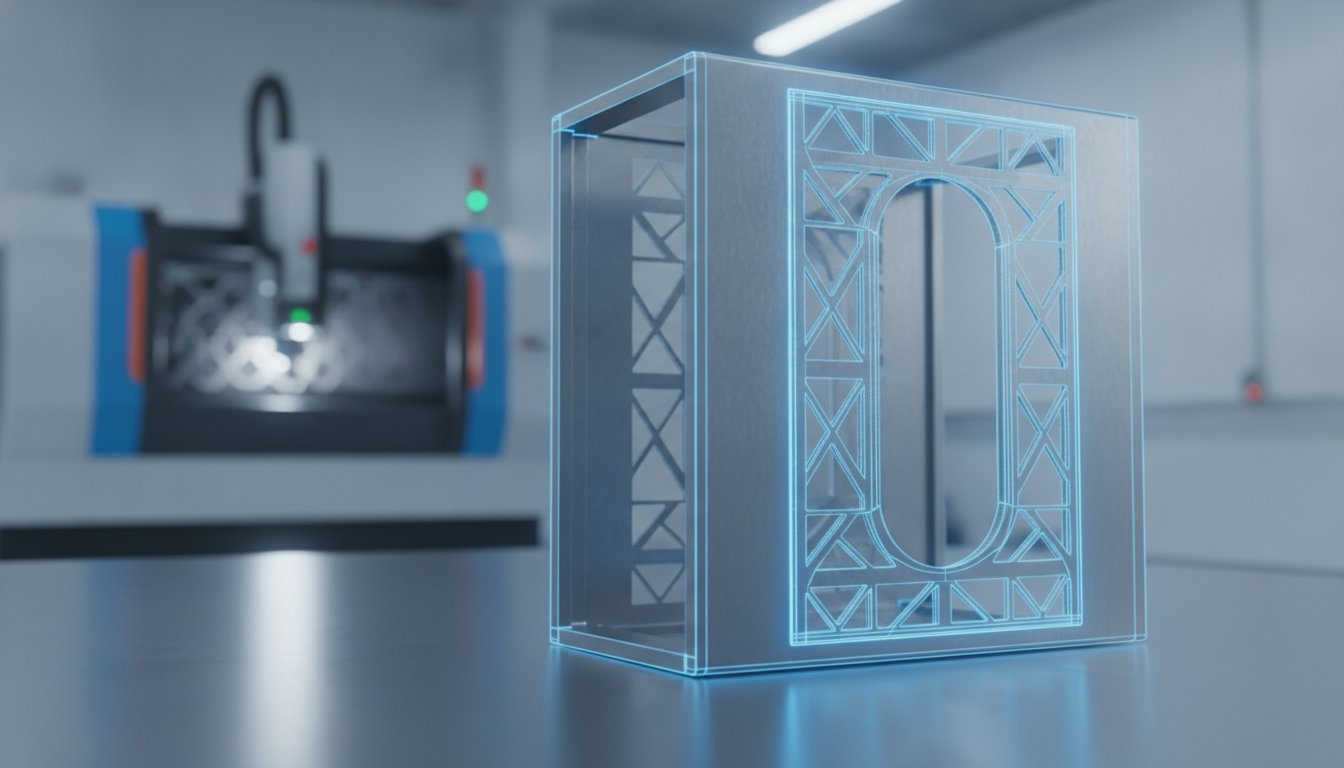
A digital model is only as valuable as the physical component it produces. If your custom sheet metal chassis and frames don't mirror your BIM coordination exactly, you're looking at expensive field collisions and wasted labor. You've likely dealt with the frustration of structural components arriving with slight deviations that stall your entire spooling workflow. It's a persistent challenge for national accounts trying to manage inconsistent quality across various regional suppliers while facing long lead times.
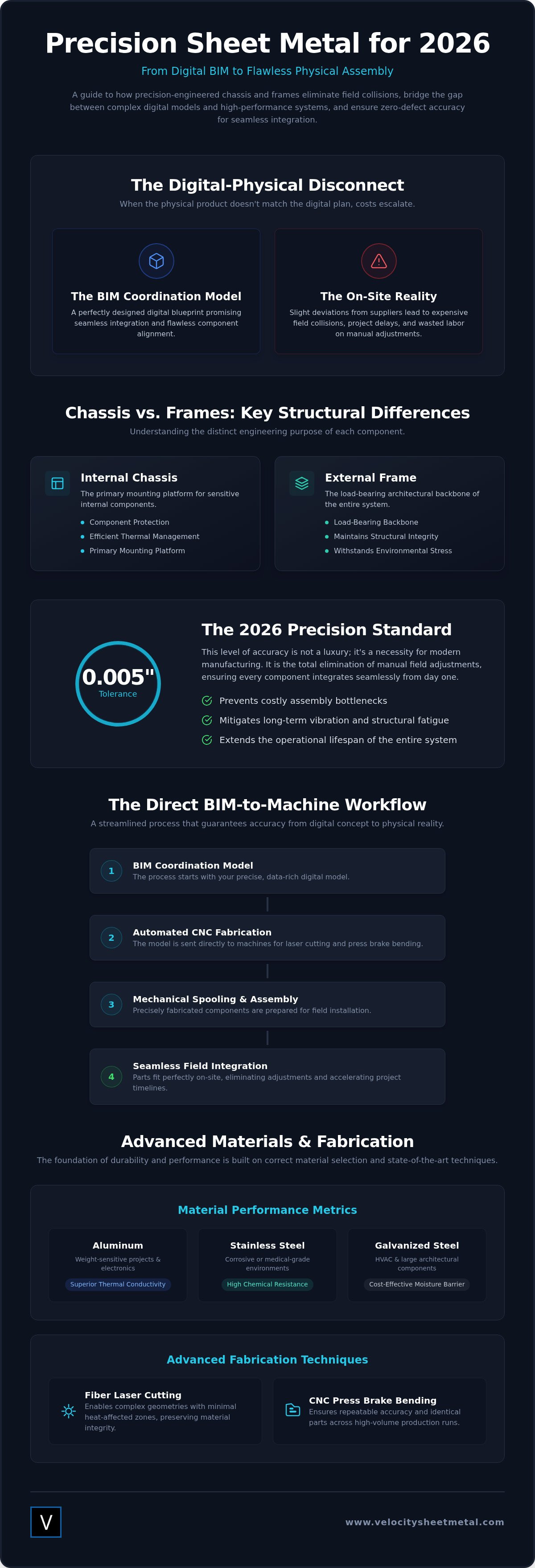
This 2026 reference guide shows you how precision-engineered chassis and frames bridge the gap between complex digital BIM models and high-performance physical systems. We'll explore how a direct BIM-to-machine workflow eliminates administrative delays and ensures zero-defect accuracy for easy field assembly. We're breaking down the technical requirements for CNC press brake bending and laser cutting tolerances. From initial digital concept to final delivery, we'll detail the path to standardized quality and seamless integration for every project.
Key Takeaways
- Differentiate between internal chassis and structural frames to optimize thermal management and long-term component protection.
- Leverage CNC Press Brake Bending and precise material selection to produce complex geometries that maintain industrial-grade structural integrity.
- Bridge the gap between digital design and physical production by integrating BIM coordination and mechanical spooling into your workflow.
- Ensure consistent quality for national accounts through standardized production processes and automated fabrication for large-scale industrial projects.
- Evaluate technical capabilities and industrial experience to select the right partner for custom sheet metal chassis and frames.
What are Custom Sheet Metal Chassis and Frames?
In modern manufacturing, custom sheet metal chassis and frames are far more than just metal boxes. They represent the structural interface where digital design meets industrial-grade physical performance. Whether it's a high-density OEM electronics enclosure or a heavy-duty HVAC mechanical system, these components must provide rigid protection while facilitating complex internal layouts. Precision fabrication ensures that every cutout, bend, and mounting point aligns perfectly with the intended BIM model. Architectural sheet metal components often require even higher structural tolerances than standard enclosures because they must withstand external environmental pressures while maintaining aesthetic consistency.
Chassis vs. Frames: Understanding the Structural Differences
While often used interchangeably, chassis and frames serve distinct engineering purposes. An internal chassis acts as the primary mounting platform for sensitive electronics or mechanical components. It's designed for component protection and efficient thermal management. Heat dissipation is critical here; the chassis often functions as a secondary heat sink or airflow guide. In contrast, an external frame serves as the load-bearing architectural backbone of the system. Much like a Vehicle frame provides the essential support for a car's powertrain and body, an industrial frame maintains structural integrity under environmental stress or heavy equipment loads. Hybrid assemblies often bridge this gap, serving as both the internal support and the visible exterior of the product. They must be rugged enough to handle transport and installation while remaining light enough for efficient shipping.
The Necessity of Precision in 2026 Manufacturing
As industrial systems become more compact and complex, the margin for error has vanished. In 2026, standard tolerances have tightened significantly across the industry. Utilizing 0.005-inch tolerances isn't just about technical bragging rights; it's about preventing assembly bottlenecks in the field. When components don't fit perfectly, labor costs skyrocket and project timelines fail. Precision fabrication is the total elimination of manual field adjustments. It ensures that every part drops into place without the need for grinding, drilling, or forcing connections. This level of accuracy also mitigates long-term vibration and structural fatigue. A perfectly aligned frame distributes stress evenly, extending the operational lifespan of the entire system. From custom laser cutting to CNC press brake bending, the goal remains the same: delivering a product that integrates seamlessly with your spooling workflow from day one.
Engineering Standards: Materials and Fabrication Techniques
Material selection dictates the service life and performance of custom sheet metal chassis and frames. It isn't a decision based solely on price; it's a calculation of environment, weight, and mechanical stress. Using the wrong alloy leads to premature oxidation or structural failure under load. In 2026, the standard for industrial durability requires a deep understanding of how different metals react to fabrication processes like laser cutting and high-tonnage bending.
Material Performance Metrics for Chassis
Aluminum is the industry standard for weight-sensitive projects. It offers superior thermal conductivity, making it ideal for electronics that generate significant heat. Stainless steel is mandatory for corrosive or medical-grade environments. If you're building for cleanrooms or coastal installations, the 304 or 316 grades provide the necessary chemical resistance. Galvanized steel remains the workhorse for HVAC architectural components. It provides a cost-effective barrier against moisture while maintaining the rigidity required for large structural frames. Choosing the right material ensures your assembly doesn't just fit today but lasts for decades.
Advanced Forming and Laser Cutting
Precision requires more than high-quality raw stock. It demands repeatable accuracy across every production run. This is where CNC press brake services for OEMs become indispensable. Automated bending ensures that the 500th part is identical to the first, which is vital for high-volume integration. Laser cutting has largely superseded traditional punching for intricate airflow patterns and connector cutouts. It allows for complex geometries without the mechanical stress of a punch press. Modern fiber lasers also minimize 'heat affected zones.' This preserves the material's temper and prevents warping near the cut edge. If you're looking to optimize your next production run, you can consult with our fabrication team to match your specs to the right material and technique.
Surface finishes provide the final layer of protection. Powder coating offers a durable, impact-resistant finish that can be color-matched to OEM branding. For hidden structural frames, the sacrificial protection of a galvanized coating is often the most efficient choice. Balancing these fabrication techniques with the right material creates a product that stands up to the rigors of field use while maintaining the tight tolerances your digital models demand.
Digital-to-Physical: The BIM and Spooling Advantage
Precision fabrication fails if the initial data is flawed. For custom sheet metal chassis and frames, the digital workflow is the foundation of physical accuracy. We don't view these components as isolated parts; they're integrated elements of a larger mechanical ecosystem. By utilizing a "Digital Twin" approach, every bracket, flange, and mounting hole is verified in a virtual environment before a single sheet of metal enters the laser cutter. This ensures the physical result is a mirror image of the digital intent.
BIM Coordination for Mechanical Contractors
Integrating BIM for sheet metal fabrication into the early design phase is the most effective way to eliminate field collisions. Traditional fabrication often relies on static 2D drawings that miss the complexities of modern mechanical rooms. BIM coordination allows for comprehensive clash detection. We find errors in the office, not on the job site. This proactive approach ensures that a structural frame fits perfectly within a tight footprint, even when competing for space with electrical conduits, plumbing, and HVAC ductwork. It moves the problem-solving stage away from the expensive labor of the field and into the controlled environment of the design suite.
The Role of Mechanical Spooling Services
Mechanical spooling acts as the essential bridge between high-level engineering and the factory floor. It converts complex 3D models into machine-ready files with surgical precision. This process involves generating accurate spool drawings that dictate exactly how each component is cut, bent, and assembled. By automating the conversion of 3D models into fabrication instructions, mechanical spooling reduces lead times by approximately 30% compared to traditional manual drafting methods. It also enables digital nesting and optimization. We maximize material yield by arranging parts efficiently on a single sheet, which significantly reduces raw material waste. This streamlined handoff ensures that the speed of our automated production lines matches the speed of your project schedule. Every spool is a roadmap for zero-defect assembly, allowing your team to focus on installation rather than fabrication troubleshooting.
Scalability and National Account Support
Scaling the production of custom sheet metal chassis and frames demands a logistical framework built for multi-state consistency. For national accounts, the primary challenge is quality drift. Fragmented regional sourcing often results in varying tolerances that stall assembly lines and inflate field labor costs. Centralizing your fabrication with a partner capable of national shipping eliminates these technical and administrative bottlenecks. It's about moving from a reactive procurement model to a proactive, standardized supply chain. Our on-demand part production supports rapid OEM prototyping, allowing you to test designs in the real world before committing to a full-scale run. This speed-to-market is essential in 2026, where waiting months for a structural component is no longer an option.
Standardization for National Accounts
Consistency is the hallmark of industrial reliability. Maintaining tight tolerances across thousands of units requires a unified fabrication approach. We utilize standardized production protocols to ensure that every chassis, whether it's the first prototype or the ten-thousandth production unit, meets the exact same digital specifications. This centralized model offers significant advantages for large-scale OEMs. It simplifies project management by providing a single point of contact and a unified billing system. You don't have to manage dozens of regional vendors with varying capabilities. Instead, you get a predictable partner that scales with your growth. This approach also enables more aggressive procurement strategies. We offer volume pricing that rewards long-term partnerships and large-scale industrial projects. By standardizing quality across every state, we ensure your field teams spend their time installing rather than adjusting.
Logistics and National Distribution
Delivery is the final, critical step in the fabrication process. Large architectural frames and custom chassis require specialized packaging and crating to prevent structural damage or warping during transit. We don't just ship parts; we manage the entire logistics lifecycle. From the shop floor to the final delivery point, we provide full tracking and transparency for every shipment. Speed is a core component of our infrastructure. We significantly reduce lead times by leveraging automated coil line duct fabrication workflows. These high-speed systems allow us to handle high-volume structural components with surgical accuracy. This ensures your components arrive on-site and on-time, regardless of the project's geographic location. If you need to streamline your national procurement and eliminate administrative delays, partner with our national accounts team to secure your supply chain today.
Choosing a Partner for Custom Sheet Metal Chassis and Frames
Selecting a partner for custom sheet metal chassis and frames is a high-stakes decision. It's the difference between a project that flows and one that fails. Raw production speed is a liability if the final product doesn't meet the specified tolerances. You need an operator who understands that a chassis isn't just a part; it's a structural interface. Our team brings 50+ years of combined management experience to every project. This isn't just a number. It represents a deep understanding of how metal behaves under stress and how digital models translate to physical reality. We've replaced the typical administrative delays of the industry with a streamlined, tech-forward workflow that prioritizes your timeline.
The Velocity Difference: Industrial Pragmatism
Industrial pragmatism is the core of our operation. We act as the essential bridge between your high-level BIM coordination and the physical factory floor. In the 2026 manufacturing environment, precision laser cutting services are non-negotiable for OEMs. These services allow us to move from digital concept to physical reality with surgical precision. We ensure every port, flange, and mounting point is exactly where it needs to be. We don't just follow instructions; we apply a "can-do" attitude to complex structural challenges. If a design presents a potential field collision or structural weakness, we identify it during the technical review. This proactive expertise separates a simple vendor from a true industrial partner who is equally comfortable in a design meeting and on the shop floor.
Get Started on Your Custom Fabrication Project
Moving from a digital file to a finished product should be a seamless transition. To begin, we require laser-ready or spool-ready files that reflect your final design intent. Our automated systems process these inputs directly. This eliminates manual data entry errors and accelerates the entire production cycle. For national accounts, we offer standardized production protocols that ensure consistent quality across multi-state projects. Whether you're prototyping a new OEM enclosure or scaling a high-volume industrial frame run, we provide the transparency and tracking you need to manage your supply chain. Don't let fabrication bottlenecks stall your next project. Contact Velocity Sheet Metal for a precision fabrication quote today and see how our BIM-to-machine workflow can transform your production efficiency.
Bridging the Gap Between Digital Design and Industrial Reality
Precision matters when your project moves from a spool drawing to the factory floor. We've explored how material performance and automated fabrication workflows ensure your custom sheet metal chassis and frames fit perfectly the first time. By integrating BIM coordination directly into the manufacturing process, you eliminate the field collisions and administrative delays that stall national accounts. You're no longer just buying metal; you're investing in a technical interface that supports your entire system's lifecycle.
Velocity Sheet Metal brings 50+ years of combined management experience to every structural challenge. Our advanced BIM-integrated manufacturing and national shipping capabilities ensure your components arrive on-site, on-time, and within tolerance. We've built our reputation on industrial pragmatism and a "can-do" attitude that handles the most complex OEM requirements. It's time to stop fighting field adjustments and start relying on surgical accuracy. Request a Precision Fabrication Quote from Velocity Sheet Metal today and secure your project's structural integrity. We're ready to move your next digital concept into physical reality immediately.
Frequently Asked Questions
What materials are best for outdoor industrial chassis?
Stainless steel and galvanized steel are the primary choices for outdoor environments. Stainless steel 316 provides the highest resistance to corrosion in coastal or chemical-heavy areas. Galvanized steel offers a cost-effective alternative with a sacrificial zinc coating that prevents rust. Aluminum is another option if weight reduction or heat dissipation is a priority. Your choice depends on the specific environmental exposure and structural load requirements of the project.
How does BIM coordination improve the accuracy of custom frames?
BIM coordination eliminates the guesswork by creating a digital twin of your assembly. We use these models to identify potential clashes with other mechanical systems before production begins. This virtual verification ensures that custom sheet metal chassis and frames fit perfectly within their designated footprint. It moves the problem-solving phase to the office, preventing expensive field modifications and ensuring that every mounting hole aligns with the physical reality of the site.
Can you ship large-scale sheet metal frames nationally?
We provide national shipping and logistics management for all large-scale structural components. Our team uses specialized crating and packaging strategies to protect architectural frames from warping or damage during transit. We maintain full transparency with tracking from the factory floor to the final delivery point. This ensures your components arrive on-time and ready for installation, regardless of your project's location within the United States.
What is the typical lead time for custom chassis prototypes?
Lead times vary based on design complexity and volume, but our automated workflows significantly accelerate the process. By converting digital files directly into machine instructions, we eliminate the administrative delays common in traditional shops. Standard prototypes often move through technical review and fabrication faster than manual drafting allows. We prioritize speed and accuracy to help OEMs meet tight market windows without compromising on the structural integrity of the final part.
How do I ensure my spool drawings are compatible with your machines?
Compatibility is ensured by submitting laser-ready or spool-ready files in standard 3D formats. We typically work with STEP, DXF, or DWG files to drive our CNC equipment. Our engineering team performs a technical review of every submission to verify that the digital data translates correctly to our automated production lines. This direct handoff from your design software to our machines minimizes manual entry errors and maintains the highest levels of precision.
What tolerances can I expect for CNC press brake bending?
You can expect tight industrial tolerances, often reaching 0.005 inches for critical dimensions. Our CNC press brake bending equipment uses automated controls to ensure repeatable accuracy across every bend. This level of precision is vital for complex geometries where multiple parts must fit together seamlessly. High-tonnage capabilities allow us to maintain these tolerances even when working with thicker gauges of stainless or galvanized steel for structural frames.
Do you provide standardized quality for national OEM accounts?
We specialize in providing standardized quality for custom sheet metal chassis and frames across national OEM accounts through centralized fabrication. Instead of dealing with fragmented regional suppliers, you get a single point of contact and a unified production standard. This ensures that every unit meets the same technical specifications, regardless of where it's being installed. Our 50+ years of combined management experience help us maintain this consistency across high-volume production runs.
How does automated fabrication reduce costs for high-volume orders?
Automated fabrication reduces costs by maximizing material yield and minimizing manual labor. We use digital nesting software to arrange parts on a single sheet of metal, which significantly cuts down on raw material waste. High-speed laser cutting and automated coil lines allow us to process high-volume orders with surgical precision. These efficiencies lead to lower per-unit costs for large-scale production runs while maintaining the zero-defect quality required for easy field assembly.