Custom Curb Adapters: Sizing, Selection, and Fabrication
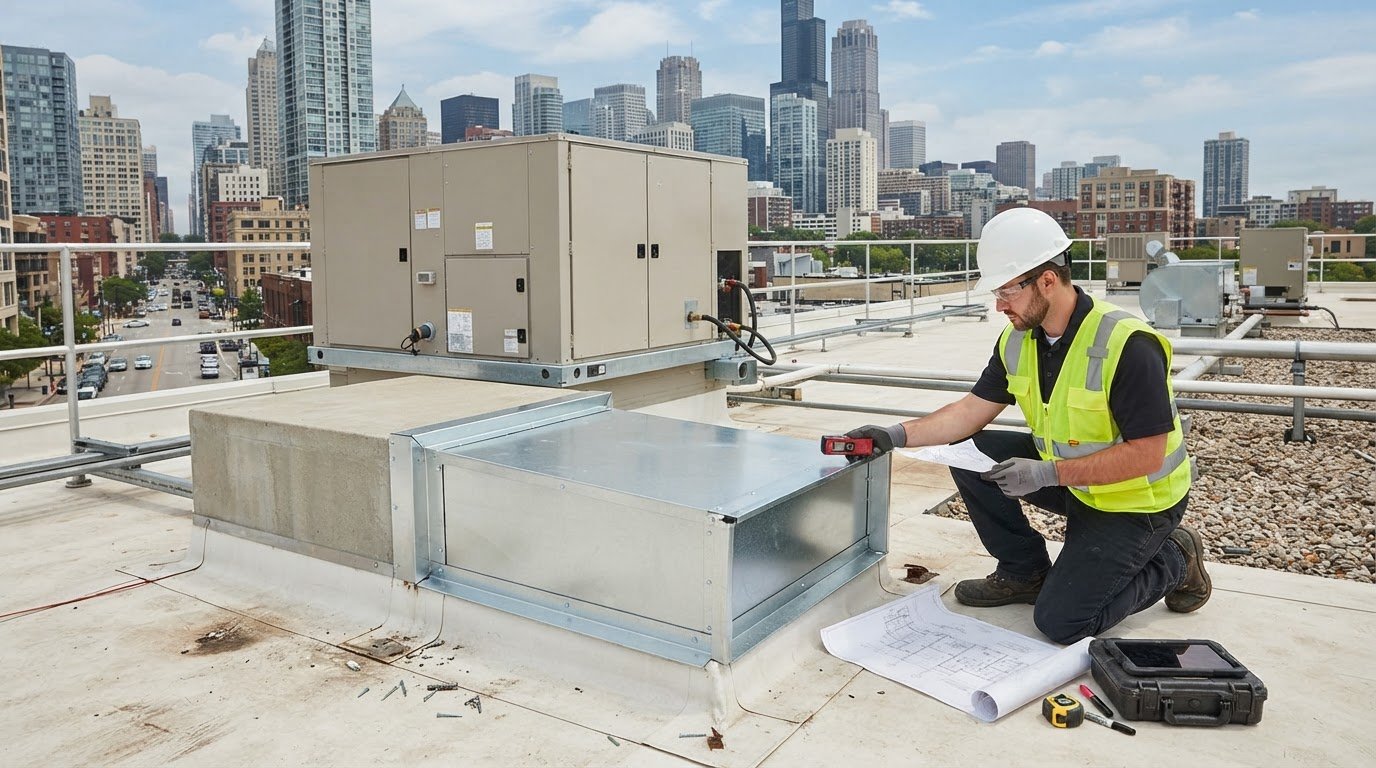
A rooftop replacement can be ready to lift before anyone knows whether the existing curb will fit the new unit. Custom curb adapters bridge that gap, but only when the dimensions and equipment interfaces are verified before fabrication begins.
It’s reasonable to be cautious: an incomplete measurement or a mismatch between the curb and replacement unit can create avoidable coordination problems. Gather the right details early instead of relying on assumptions or a partial equipment schedule.
This guide covers what to measure and submit for a quote, how the existing roof curb and replacement equipment affect adapter design, and what to clarify with a fabrication partner during review. You’ll also learn how to keep procurement moving when model numbers, drawings, or field information are incomplete. Velocity Sheet Metal offers custom curb adapters and sheet metal fabrication, with BIM coordination and spool drawings as related capabilities. A clear handoff from project information to fabrication review helps identify gaps before they become delays.
Key Takeaways
- Trace the fit from the existing curb to the adapter geometry and replacement unit’s base dimensions before fabrication.
- Custom curb adapters depend on verified project interfaces, not assumptions about standard equipment sizes.
- Compare options by interface fit, supporting documents, review steps, and delivery coordination.
- Organize equipment details, submittals, curb measurements, and notes so discrepancies can be identified during review.
- Coordinate fabrication requirements with a partner whose capabilities include curb adapters and relevant BIM coordination.
What Does a Custom Curb Adapter Do in an HVAC Replacement?
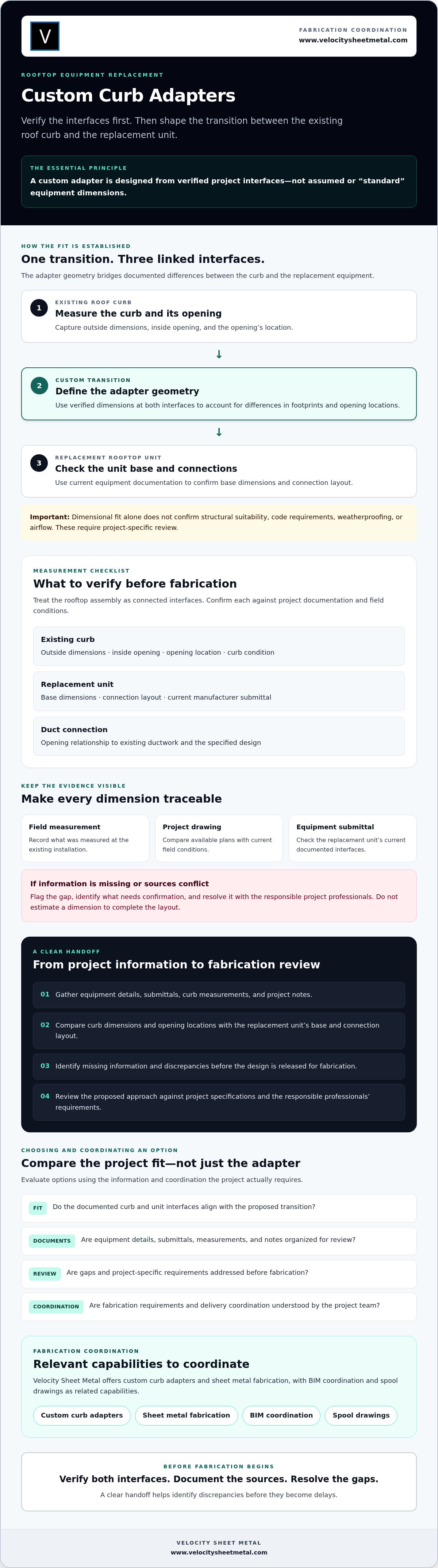
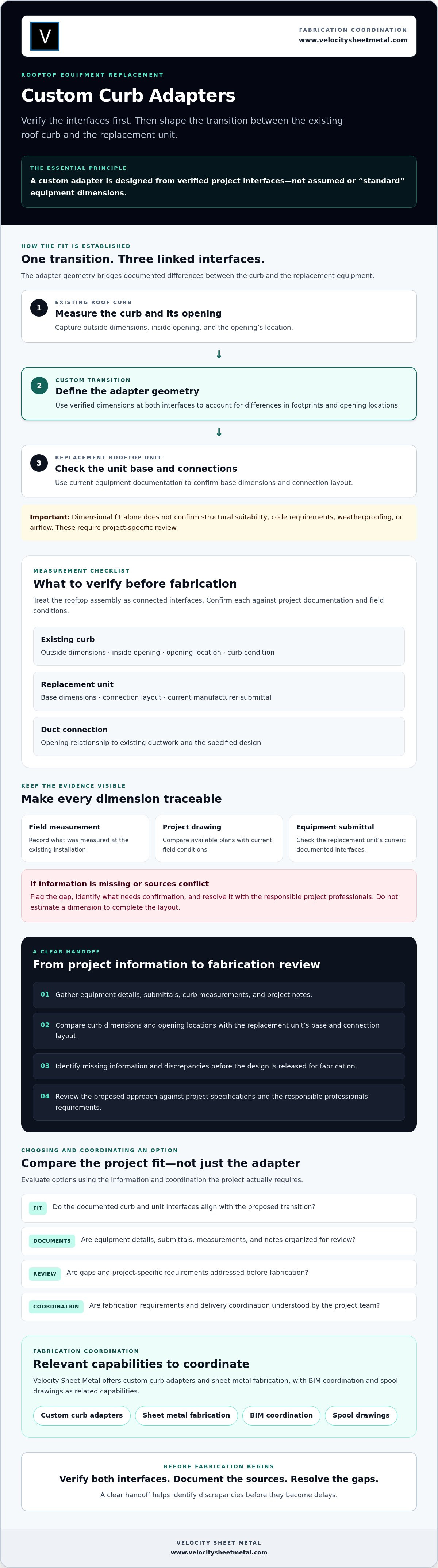
A custom curb adapter is a fabricated transition between two interfaces: the top of an existing roof curb and the base of replacement rooftop equipment. Its geometry accounts for documented differences between them, such as a changed footprint or opening location. The adapter does not establish those dimensions. Field conditions and project documents still need to be verified before fabrication.
An adapter may allow a project to retain an existing curb rather than replace it, depending on the curb’s condition and project requirements. It is not a general fix for every difference in equipment, structure, weatherproofing, or airflow. Confirm the proposed approach against project specifications and with the qualified professionals responsible for design and installation.
When does rooftop equipment replacement call for a custom adapter?
A replacement unit may have a different base footprint or connection layout from the equipment it replaces. If those interfaces don’t align with the existing curb, a custom transition may be appropriate. For example, the new unit’s base opening may sit in a different position from the curb opening, even if both units serve the same general purpose.
Whether an adapter can preserve the curb depends on verified dimensions, curb condition, and project requirements. Have the project team review equipment submittals and existing conditions before selecting a solution. Don’t treat an adapter as a substitute for assessing whether the curb itself is suitable.
Which parts of the rooftop assembly must align?
Review the rooftop assembly as separate, connected interfaces. A rooftop unit (RTU) sits above the roof curb; below it, the duct connection must align with the unit and the system. Each interface has its own dimensions and opening locations. Confirm them using project documentation and field verification rather than assuming a catalog description captures site conditions.
- Existing curb: Verify its outside dimensions, inside opening, and opening location.
- Replacement unit: Check the base dimensions and connection layout in current equipment documentation.
- Duct connection: Confirm how the openings relate to the existing ductwork and specified design.
These checks clarify what the adapter must bridge. They don’t automatically establish structural, weatherproofing, or airflow requirements; those need project-specific review. Custom curb adapters work best as coordinated fabrication components based on verified interfaces and clear responsibility for the surrounding assembly.
How Custom Curb Adapters Bridge Existing Curbs and Replacement Units
An adapter bridges three linked points: the existing curb’s top dimensions and opening, the adapter’s transition geometry, and the replacement unit’s base dimensions and connection layout. Its design depends on verified conditions at both interfaces, not just the nominal size of the old or new equipment.
Think of the adapter as the geometry between two sets of information. The existing curb establishes one side, and the replacement unit’s manufacturer submittal establishes the other. The transition must account for how their footprints and openings relate. The project team should separately review structural suitability, code requirements, weatherproofing, and airflow. Dimensional fit alone doesn’t confirm that the full assembly meets project requirements.
How do curb and rooftop-unit dimensions affect adapter fit?
Compare the curb’s outside dimensions with its inside opening and the opening’s location. Then check the replacement unit’s base dimensions and connection layout in the current manufacturer submittal. These details show where the adapter must transition between the curb and unit, and whether the openings align as intended.
Keep the source for each measurement clear. Identify whether a dimension comes from a drawing, submittal, or field measurement. If a dimension is missing or two sources conflict, flag it for confirmation. Don’t estimate a measurement to complete the layout.
Why do drawings and field conditions need to agree?
Existing drawings can miss changes made after the original installation, while equipment documentation may be revised during procurement. A fit assumption based on only one source may therefore describe a curb or unit that isn’t actually part of the current project.
Compare field measurements with available plans and replacement-equipment submittals. Record differences, identify what needs confirmation, and resolve discrepancies with the responsible project professionals before the design is released for fabrication. A clear review at this stage can help prevent a mismatch from surfacing later in coordination.
Keep other design checks distinct once dimensions are reconciled. The project team must determine whether structural conditions, applicable code provisions, weatherproofing details, and airflow requirements are addressed. Don’t assume every adapter handles these in the same way.
If you’re preparing a project for fabrication review, gather the curb and unit information first, then review Velocity Sheet Metal’s curb adapter offering as a potential fabrication resource.
How to Compare Custom Curb Adapter Options for Your Project
Compare options against the project record, not a general promise of fit or speed. Whether a stock or custom option is suitable depends on how the verified curb and replacement-unit dimensions compare with project specifications. A standard option may work if its documented interfaces match. If they don’t, a custom design may bridge the mismatch, provided its inputs are complete and checked. Fabrication can address a dimensional difference; it can’t resolve missing or conflicting information by itself.
Apply the same criteria to every option. This makes differences in fit, documentation, review, and logistics visible before procurement moves forward.
| Comparison point | What to confirm |
|---|---|
| Interface fit | How the proposed option matches the verified existing curb and replacement-unit interfaces. |
| Source documentation | Which drawings, equipment submittals, and field measurements support the stated dimensions. |
| Review process | How the fabricator handles questions, resolves discrepancies, and records approved changes. |
| Delivery coordination | What shipping scope and project communication are included, confirmed directly with the supplier. |
What information should buyers compare between fabricators?
Ask how each fabricator reviews project documents and identifies gaps before work proceeds. Find out how questions are sent, who confirms revised dimensions, and how changes are tracked so the team can distinguish current information from superseded details. Clarify how proposed interfaces are confirmed before fabrication is released.
Verify shipping scope and communication expectations directly as well. Don’t infer a delivery schedule or service level from a general claim. Get project-specific details in writing and coordinate them with the procurement team.
When is a custom adapter preferable to a standard option?
Start with the documented difference between the existing curb and replacement unit. Compare any standard option with project requirements only after checking its actual dimensions and connection layout. If the verified interfaces match, a standard solution may be suitable. If they don’t, request a review of a custom approach.
Unusual site conditions or unresolved conflicts need attention from the design team and relevant project professionals. The right choice follows from approved requirements, not from the label “stock” or “custom.” For custom curb adapters, complete inputs and a clear review path help turn a proposed fit into a coordinated fabrication decision.
What to Measure and Submit Before Ordering a Custom Curb Adapter
A well-organized request helps the fabricator review the actual project instead of filling gaps with assumptions. Assemble information in a clear sequence, label where each detail came from, and flag anything that still needs confirmation. For broader procurement context, see this HVAC duct fabrication procurement guide.
Which measurements and documents belong in the request?
Use this ordered checklist to prepare the request:
- Identify the equipment. Provide available identification details for the existing and replacement units, such as manufacturer and model information.
- Collect the documents. Attach current replacement-unit manufacturer submittals and relevant project drawings that show the equipment and interfaces.
- Measure the existing curb. Record its outside dimensions and opening details. Label every measurement with units and note whether it was field-verified or taken from a drawing.
- Reconcile the information. Compare field measurements with plans and equipment documents. List conflicts or unknowns instead of choosing a value without confirmation.
Include project constraints, required documentation, and the shipping destination in the quote request. Clear photographs and field notes may help explain site conditions, but first confirm with the fabricator that these materials support its review process and how it wants them labeled.
How should teams resolve missing or conflicting information?
Create a short discrepancy list. For each issue, identify the conflicting sources, the dimension or detail in question, and the project contact responsible for confirming it. For example, if a drawing and a field measurement show different curb opening locations, record both values and request direction. Don’t estimate or silently revise the project record.
Ask for clarification before authorizing fabrication if a critical interface detail remains unknown. Keep the confirmed revision with the project documents so the team and fabricator are working from the same information. For related digital coordination practices, consult the BIM sheet metal fabrication guide.
Once the equipment details, curb measurements, and unresolved questions are organized, share the project information for review. Discuss your curb adapter project with Velocity Sheet Metal.
How Velocity Sheet Metal Supports Custom Curb Adapter Fabrication
Velocity Sheet Metal lists curb adapters among its fabrication offerings. For a replacement project, a useful starting point is a coordinated review of the equipment information, existing conditions, and project requirements. This gives the fabricator a basis to assess the request and identify what still needs confirmation before fabrication planning proceeds.
Velocity also offers sheet metal fabrication, BIM coordination, and spool drawings. BIM capabilities may be relevant when the adapter needs to be considered alongside broader project geometry or other coordinated sheet metal work. Scope depends on the project. Confirm which documents and coordination steps apply to your request, as well as the adapter configuration and fabrication requirements the project calls for.
What can a buyer expect from a fabrication-focused partner?
Expect a practical handoff: provide the project information, clarify open questions, review the relevant interfaces, and establish what is needed for fabrication planning. Ask how the fabricator will flag missing details and how your team should confirm revisions. This keeps assumptions visible and gives project contacts a chance to resolve gaps before the design is released.
Confirm project-specific requirements directly. Don’t assume a particular material, tolerance, configuration, or production timeline without review and confirmation. Fabrication support is distinct from on-site HVAC installation, which should be coordinated with the appropriate project professionals.
What is the next step for a custom adapter request?
Prepare the replacement-project description, available equipment submittals, curb measurements, and relevant drawings. Include project constraints and identify any dimensions or details that remain uncertain. Then ask the fabricator to review the package and identify missing information before the design proceeds. Clear inputs help make the review focused and actionable.
For a related overview, see the curb adapter project guide. Once your documents are organized, Discuss your custom curb adapter requirements with Velocity Sheet Metal and share the project details for a capability review.
Move Your Rooftop Replacement Toward a Clear Fabrication Review
A sound adapter decision starts with verified information. Confirm the existing curb and replacement-unit interfaces, compare field measurements with current drawings and submittals, and resolve conflicting details before fabrication is authorized. These steps keep fit decisions grounded in project facts rather than assumptions.
Velocity Sheet Metal lists custom curb adapters among its offerings. The team can also support relevant project coordination through BIM coordination and spool drawings, depending on the scope. Its management team brings more than 50 years of combined industry experience. Share equipment data, curb dimensions, drawings, and project requirements so the request can be reviewed against the available information.
Discuss your custom curb adapter requirements with Velocity Sheet Metal. Provide the project details for a fabrication capability review.
Frequently Asked Questions
What is a custom curb adapter?
A custom curb adapter is a fabricated transition between an existing rooftop equipment curb and a replacement unit with different interface dimensions or opening locations. Custom curb adapters are designed around documented conditions at both connections, rather than assumed standard sizes. They may allow an existing curb to remain in use when project conditions support that approach. The project team must still verify the curb, equipment, and applicable requirements before proceeding.
How do I measure an existing HVAC curb for a custom adapter?
Record the curb’s outside length and width, its opening dimensions, and the opening’s location in relation to the curb edges. Note the units and whether each value comes from a field measurement or a drawing. Compare your measurements with available plans and flag differences for confirmation. Also gather the replacement unit’s manufacturer submittal, since its base and connection layout must be compared with the curb information.
Can a curb adapter fit any replacement rooftop unit?
No. Fit depends on the verified dimensions and opening layouts of both the existing curb and the replacement unit, along with project requirements. Check a proposed adapter against the current equipment submittal and reliable curb information. Even if the dimensional interfaces can be reconciled, the project team must separately review structural, code, weatherproofing, and airflow considerations. Ask the responsible project professionals to assess unusual conditions before approving a design.
What information do I need to request a custom curb adapter?
Provide identification details for the existing and replacement equipment, current manufacturer submittals, relevant project drawings, and field-verified curb dimensions with units clearly labeled. Include opening locations, project constraints, required documentation, and the shipping destination. Identify missing or conflicting details rather than estimating them. Ask the fabricator what information and file formats it accepts, and whether photographs or field notes support its review process.
Does a custom curb adapter eliminate the need for field verification?
No. A custom design depends on accurate information; it doesn’t confirm that drawings reflect the curb’s current condition. Compare available plans and equipment documents with field measurements, then flag discrepancies for review. If a critical interface dimension remains unknown, get clarification from the responsible project contact before authorizing fabrication. Field verification and document review work together to establish the project conditions the adapter must address.
Can a custom curb adapter be shipped nationwide?
Yes. Velocity Sheet Metal offers nationwide shipping for its products, including curb adapters. Shipping availability doesn’t establish a project-specific schedule or shipping scope, so confirm the details for your order directly. Include the destination and relevant delivery requirements in your request, and coordinate receipt with the project team. Keep fabrication review, shipping arrangements, and any on-site handling or installation responsibilities clearly assigned.
Does Velocity Sheet Metal install curb adapters on site?
No. Velocity Sheet Metal lists curb adapters as a fabrication offering, but it doesn’t provide on-site HVAC installation. The company can review project information related to a fabrication request, while installation and site work should be coordinated with the qualified professionals responsible for those activities. Share the equipment details, curb measurements, drawings, and requirements so the fabrication scope can be reviewed without confusing it with installation.