Benefits of Nitrogen Laser Cutting: Quality, Trade-Offs, and Use Cases
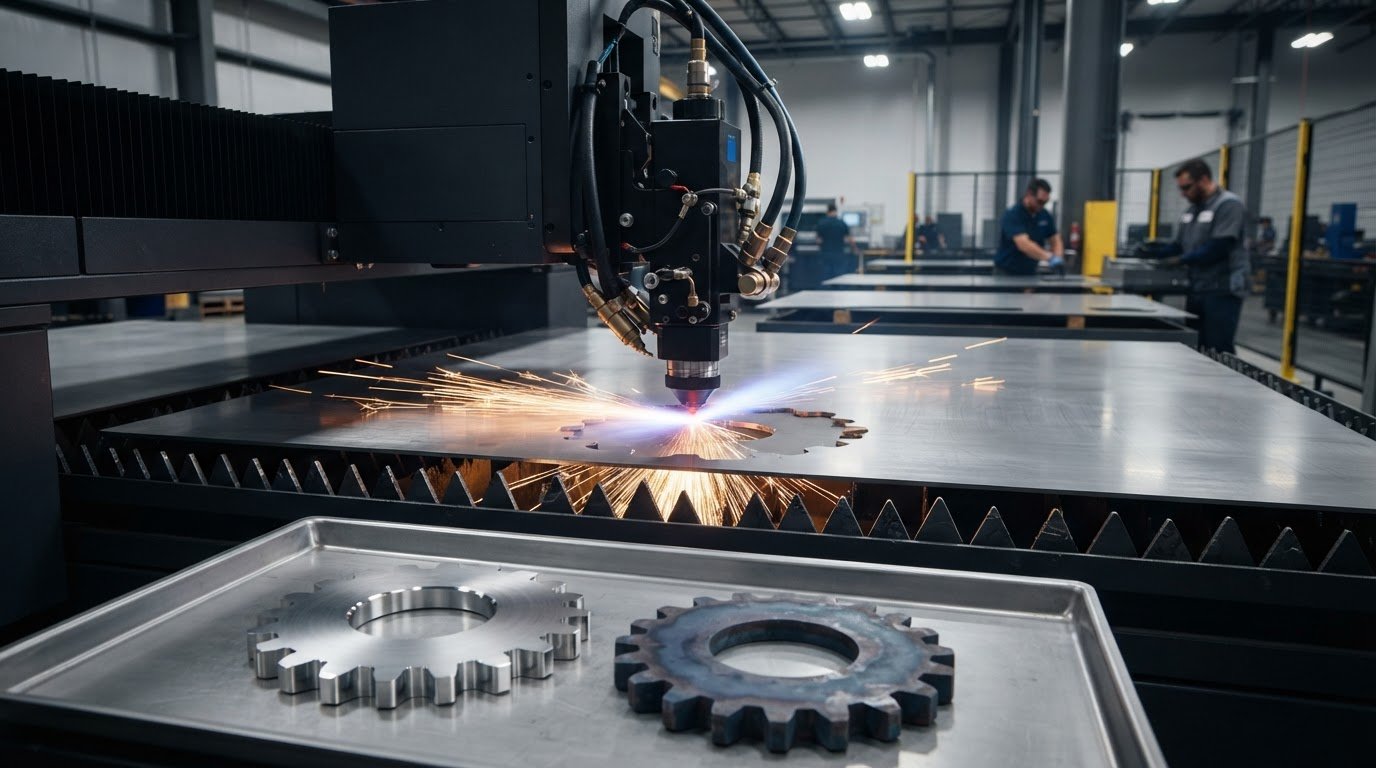
The cleanest cut can be the most economical choice, even when its assist gas costs more. The benefits of nitrogen laser cutting start at the edge: nitrogen helps limit oxidation and discoloration, which can reduce finishing work when parts need a clean appearance or must be welded or coated. That advantage depends on the material, cut quality requirements, and work that follows, so it needs to justify its place in the process.
If you’re weighing gas options, the real question isn’t simply which gas costs less. It’s whether the cut edge meets the part’s requirements and what extra work another choice could create. This guide explains how nitrogen affects cut quality and finishing, then compares it with oxygen and compressed air so you can weigh edge condition, production needs, and the full route to a usable part.
You’ll also see when nitrogen’s cleaner edge can justify its trade-offs, which material and part requirements matter, and what specifications to communicate when planning precision-cut components. The goal is a practical decision based on what the finished component needs to do.
Key Takeaways
- The benefits of nitrogen laser cutting depend on the finished part’s edge requirements, especially where appearance, welding, or coating matters.
- Nitrogen helps clear molten material from the kerf while limiting oxidation and discoloration on suitable cuts.
- Compare nitrogen, oxygen, and compressed air by edge condition and process role, then weigh finishing needs alongside gas choice.
- Start with the material and drawing, then specify visible edges, coating, welding, assembly, and finishing requirements.
- Clear, repeatable part specifications help connect custom laser cutting with consistent production from digital design to finished component.
Benefits of Nitrogen Laser Cutting: What Changes at the Cut Edge?
The benefits of nitrogen laser cutting are most visible after the beam has passed: the edge may show less oxidation and discoloration than a cut made with a reactive gas. That can matter when the part will be seen, welded, coated, or assembled with little edge preparation. The result depends on the material and cutting conditions, so nitrogen is a process choice, not a guarantee of a flawless edge.
Nitrogen assist gas is gas directed through the cutting nozzle to help clear molten material from the kerf, the narrow opening made by the laser. It is distinct from nitrogen generation equipment, which produces or supplies nitrogen for a process. And it is not the same as a nitrogen laser: the linked Nitrogen laser article describes a type of laser, not nitrogen used as assist gas in metal cutting.
How nitrogen affects the laser-cut edge
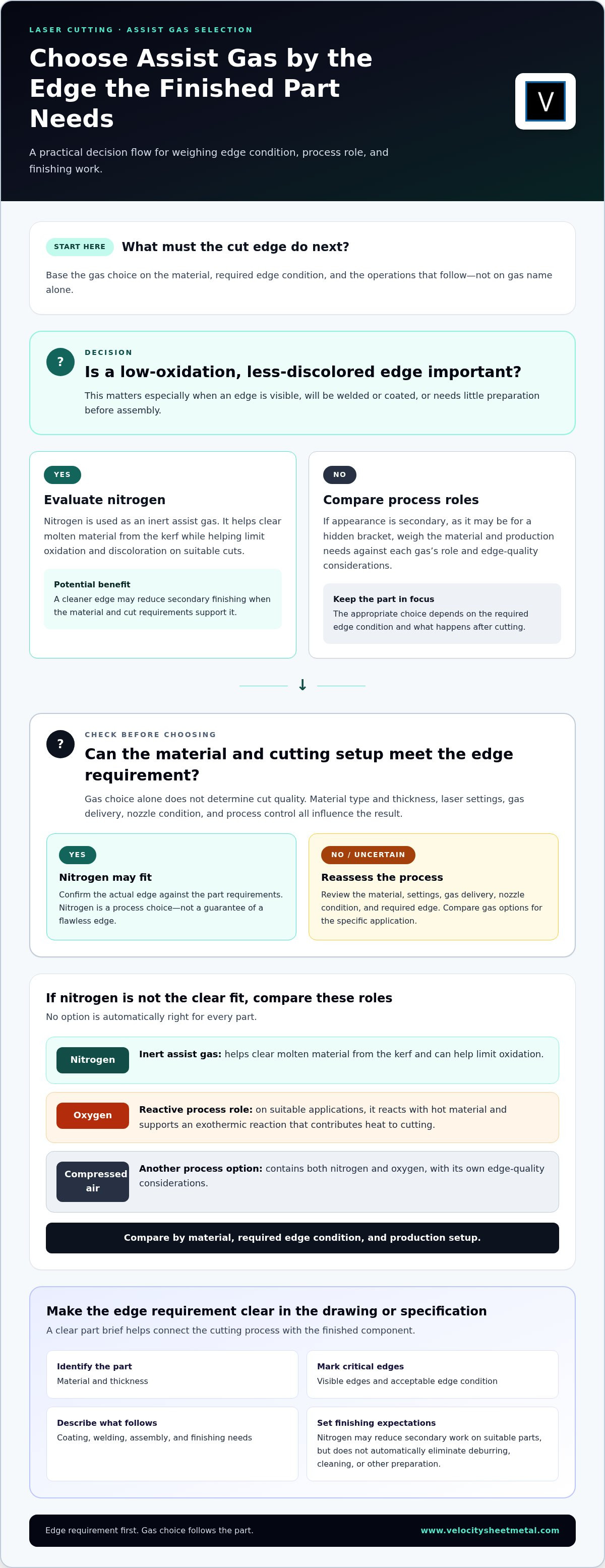
The focused beam heats and melts material along the cut path. Assist gas flows through the kerf to push molten material out, helping form the cut. Nitrogen is generally used for its inert behavior: unlike oxygen, it doesn’t support an oxidation reaction at the cut edge. Oxygen, by contrast, reacts with some metals during cutting and can contribute heat to the process. Those different roles affect both the cut and the edge left behind.
Gas choice alone doesn’t determine quality. Material type and thickness, laser settings, gas delivery, nozzle condition, and process control all influence the result. A clean-looking edge still needs to meet the part’s actual requirements.
Why edge condition matters after cutting
Oxide or discoloration can mean extra preparation before a part is ready for coating, welding, or final assembly. For example, a stainless steel component with a specified clean, consistent edge may call for a different cutting approach from a hidden bracket where appearance is secondary. The right process depends on the material and the next operation, not just the cut itself.
Nitrogen may reduce secondary finishing on suitable parts, but it doesn’t automatically eliminate deburring, cleaning, or other preparation. Define the edge requirement on the drawing or in the part specification. Identify visible edges, coating or welding needs, and acceptable finishing. That clarity helps align the cutting process with what happens next, from the first cut to the finished component.
How Nitrogen Assist Gas Works in Laser Cutting
Laser cutting is a coordinated process. A focused beam heats a narrow path in the workpiece, melting material to form a kerf. Gas delivered through a nozzle at the cutting point helps expel that molten material. With nitrogen assist gas, the flow displaces melt from the kerf while the gas’s inert behavior can help limit oxidation. The benefits of nitrogen laser cutting depend on how this interaction is set up for the material and part.
Gas selection and gas supply are separate decisions. Nitrogen is the process gas used at the cutting head; a facility may obtain it from a delivered supply or produce it on site. The source affects how the gas is supplied, not the basic role nitrogen plays in the cut.
Nitrogen, oxygen, and compressed air have different process roles
Each gas interacts with the cut differently. On suitable applications, oxygen reacts with hot material and supports an exothermic reaction that contributes heat to cutting. Nitrogen is used as an inert assist gas, helping clear the kerf without promoting that same oxidation reaction. Compressed air is another option, with its own edge-quality considerations because it contains both nitrogen and oxygen.
So the gas does more than move molten material. Its chemistry can affect the cut edge and the process itself. The appropriate choice depends on the material, the required edge condition, and the production setup.
Laser type and setup influence the result
Fiber lasers are common in metal fabrication, though they aren’t the only laser technology used for cutting. Regardless of laser type, the outcome depends on the interaction among beam focus, material, gas flow, and cutting settings. A centered, suitable nozzle helps deliver gas to the kerf. Focus position, gas pressure, and programmed parameters also affect how reliably the melt clears and how the edge forms.
There’s no universal setting that produces the same result on every machine or part. A parameter that works for one material or thickness may not suit another. The practical takeaway is that nitrogen helps eject molten material while limiting oxidation, but actual edge quality also depends on the laser, nozzle condition, gas delivery, material, and application-specific settings.
That process understanding helps turn a drawing into a manufacturable component. For custom laser-cut parts, clear material and edge requirements provide a useful starting point for production planning.
Nitrogen vs. Oxygen vs. Air: Which Cutting Gas Fits the Job?
Choose the assist gas around the material and finished part, not by gas name alone. Nitrogen can be a strong fit when low oxidation and less edge discoloration matter. Oxygen can support cutting through an exothermic reaction on suitable applications, while compressed air offers another process option with its own edge-quality considerations. None is automatically right for every part.
| Gas | Typical process role | Edge condition and trade-offs |
|---|---|---|
| Nitrogen | Inert assist gas that clears molten material from the kerf. | Can help limit oxidation and discoloration. Gas use, supply planning, and setup need to fit the application. |
| Oxygen | Reactive gas that can support an exothermic cut on suitable materials and applications. | May leave an oxidized edge, which can affect coating, welding, or finishing requirements. |
| Compressed air | Alternative assist gas used for some cutting applications. | Its oxygen content can influence edge condition. Suitability depends on material and the finish the part needs. |
When nitrogen’s edge-quality benefits can matter most
The benefits of nitrogen laser cutting can be especially relevant when discoloration conflicts with a specified appearance or creates extra preparation before the next operation. Consider a stainless component with a visible edge that will be incorporated into an assembly. A low-oxidation cut may help keep finishing requirements manageable and support a cleaner transition into fabrication. A concealed part with less demanding edge criteria may not need the same process choice.
Use the part’s downstream path to guide the decision. Welding, coating, assembly, and appearance requirements can all change what counts as an acceptable edge. Nitrogen isn’t necessary for every material or component, and the gas alone doesn’t guarantee a particular finish.
Trade-offs to evaluate before specifying nitrogen
Separate the process decision from the supply decision. First determine which gas suits the material, thickness, edge specification, and production requirements. Then plan how the chosen gas will be sourced and supplied consistently. Nitrogen consumption and supply arrangements are operational considerations, but they don’t determine whether nitrogen is the right gas for the cut.
Also account for process setup and total production flow. Cutting speed and productivity depend on the material, thickness, equipment, and parameters, as well as any finishing required afterward. Compare the complete route from cut to usable part rather than assuming one gas always cuts faster or costs less overall.
How to Decide Whether Nitrogen Laser Cutting Fits Your Part
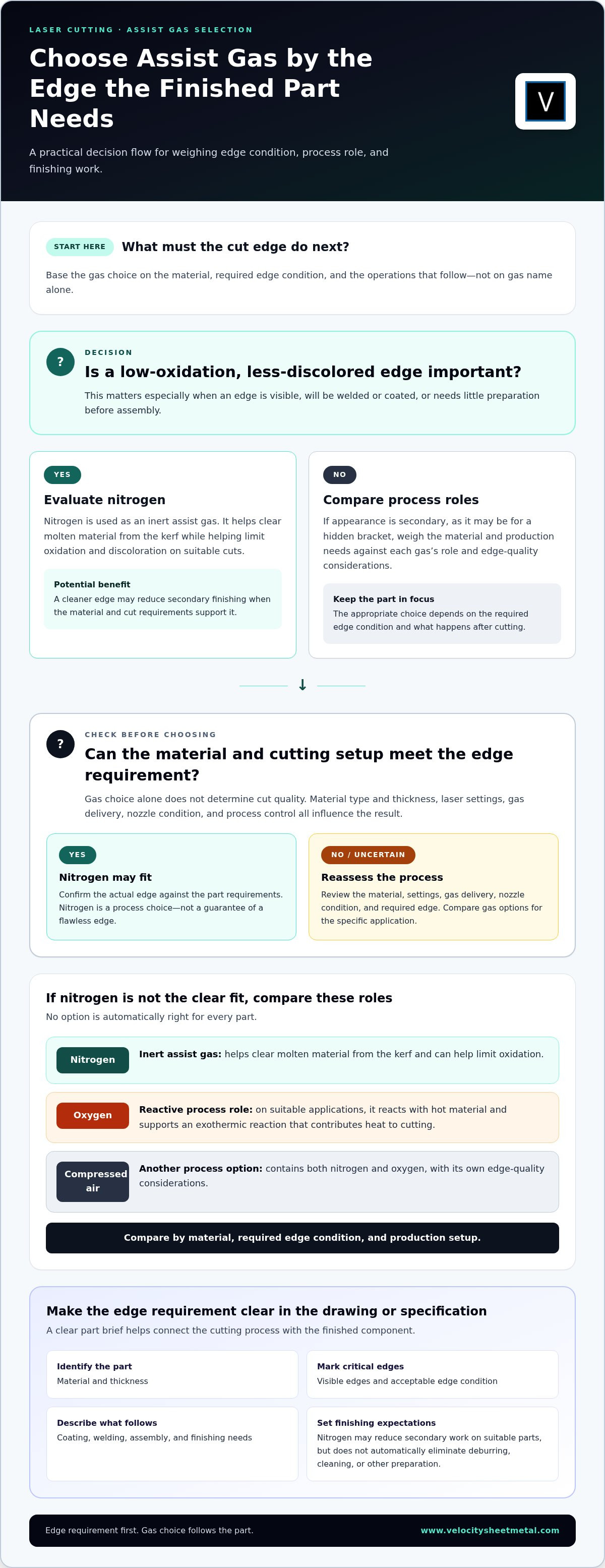
Make the decision from the part outward. Start with what the drawing requires, then consider how the cut edge will perform in the next operation. Nitrogen may be a good fit when oxidation conflicts with the specified finish, but material, geometry, and production requirements also matter. A clear review prevents gas selection from becoming a guess.
Start with the material, thickness, and finished-part requirements
Record the material grade and thickness, then identify critical features and the required edge condition. Mark which edges will remain visible and which will be hidden, coated, welded, formed, or joined during assembly. These details help distinguish a cosmetic preference from a functional requirement.
For example, an edge that will be coated or welded may need preparation beyond cutting, while a visible edge may have stricter appearance criteria. Flag these downstream steps early. They affect whether nitrogen’s reduced oxidation is valuable and what finishing expectations should be included in the plan.
Turn the drawing into a manufacturable cutting plan
Share the current drawing, revision, expected quantity, and any critical dimensions or edge notes for production planning. Be specific about acceptable discoloration, burrs, and post-cut preparation where those factors matter. If the required edge condition is uncertain, a process review or representative sample can help assess the result before applying the specification across a production run.
For broader guidance on evaluating process and part requirements, see the precision laser cutting services buyer’s guide.
Keep the part decision separate from the gas-supply decision. First define what the component needs. Then plan how a selected process gas will be supplied and managed. Use this checklist to keep both decisions clear:
- Part requirements: Material grade, thickness, geometry, critical features, quantity, and drawing revision.
- Edge requirements: Visible edges, acceptable appearance, and any limits related to oxidation or discoloration.
- Downstream work: Coating, welding, forming, assembly, and finishing steps.
- Supply planning: Gas source, availability for production, and continuity of supply.
The benefits of nitrogen laser cutting are easiest to evaluate against defined requirements, not in isolation. Velocity Sheet Metal provides custom laser cutting for precision parts, connecting clear part information with on-demand production.
From Nitrogen Cutting Requirements to Custom Laser-Cut Parts
A gas decision becomes useful when it’s translated into a clear part specification. Material, edge requirements, drawing accuracy, and downstream operations all shape the route from digital design to finished component. Nitrogen may suit a part with low-oxidation edge requirements, but the production plan also needs to define what the component must do after cutting.
Velocity Sheet Metal provides custom laser cutting and on-demand part production. Clear, repeatable specifications help align production across parts and projects, especially when cut components need to fit into a wider fabrication workflow. Nationwide shipping and national account support help serve projects across the country.
What to include when preparing a custom laser-cut part request
Give the production team the information needed to understand both the drawing and the finished part. Include the latest drawing, material details, quantity, revision level, and critical edge requirements. Identify edges that will be visible, coated, welded, or joined, along with any limits on discoloration or required finishing.
Also flag forming, assembly, and installation interfaces that affect how the part must fit with other components. For aluminum-specific considerations, see custom aluminum laser cutting techniques and tolerances. These details help connect the cut part to its next step instead of treating cutting as an isolated operation.
Connect laser cutting with the wider fabrication workflow
Laser-cut components may move into bending, fit-up, or assembly. Sharing those requirements early helps make the transition from flat pattern to fabricated component easier to plan. Velocity Sheet Metal also provides CNC press brake bending, so part geometry and forming needs can be considered as related stages of a sheet-metal workflow.
For projects where model coordination matters, BIM for sheet metal fabrication workflows offers further context on connecting digital information with physical production. The benefits of nitrogen laser cutting matter most when the edge requirement supports the part’s full production path.
Bring your drawings and part requirements together for a production-ready conversation. Explore custom laser cutting for on-demand parts and move from design details toward a fabricated component.
Turn Your Edge Requirements Into a Production Plan
The benefits of nitrogen laser cutting depend on the job: nitrogen can help limit oxidation when edge condition matters, while oxygen and compressed air may suit other material and production requirements. The right choice starts with the finished part. Define the material, edge expectations, and next steps such as welding, coating, or assembly before selecting a process.
Clear drawings and repeatable specifications help carry those requirements from digital design to fabricated component. Velocity Sheet Metal provides custom laser cutting and on-demand part production, backed by nationwide shipping and national account support. Its management team brings more than 50 years of combined industry experience.
Ready to move from process questions to a part plan? Share your part requirements with Velocity Sheet Metal. Bring the drawing, material details, quantity, and critical edge or finishing notes. A clear starting point helps shape the production conversation and keeps the finished component aligned with what your project needs. Start with a well-defined requirement for your next precision-cut part.
Frequently Asked Questions
What are the main benefits of nitrogen laser cutting?
The main benefits of nitrogen laser cutting are reduced oxidation and discoloration on suitable cuts, which can help parts meet appearance or downstream fabrication requirements. Nitrogen also helps clear molten material from the kerf. A cleaner edge may reduce some post-cut preparation, especially where the part will be coated, welded, or assembled. Results depend on the material, thickness, equipment, settings, and edge specification.
Does nitrogen laser cutting prevent oxidation on every metal?
No. Nitrogen can help limit oxidation at the cut edge, but it doesn’t guarantee an oxide-free result on every metal or setup. Material composition, thickness, gas delivery, nozzle condition, and cutting parameters all influence the outcome. Define the required edge condition for the specific part, including whether discoloration is acceptable and whether the cut edge will be visible, coated, welded, or further finished.
Is nitrogen or oxygen better for laser cutting steel?
Neither gas is always better for steel. Oxygen can support an exothermic cutting reaction on suitable steel applications, while nitrogen is often selected when limiting oxidation and discoloration is important. For a visible stainless component that will be welded or coated, edge condition may weigh heavily in the choice. For other steel parts, process and finish requirements may point elsewhere. Material grade, thickness, equipment, and specifications guide selection.
Can nitrogen laser cutting reduce post-cut finishing?
It can reduce finishing work when oxidation or discoloration from another process would otherwise need attention. A cleaner edge may be useful before coating, welding, or assembly. It won’t automatically remove every finishing step: parts may still need deburring, cleaning, or preparation based on their design and use. Specify the acceptable edge condition and downstream requirements so the cutting plan can account for the complete route to a usable part.
How does nitrogen assist gas work in laser cutting?
Nitrogen assist gas flows through the cutting nozzle toward the point where the focused laser melts the material. The gas helps push molten material out of the narrow cut, or kerf, as the laser moves along the programmed path. Nitrogen’s inert behavior can help limit oxidation compared with a reactive gas such as oxygen. The resulting edge depends on the material, gas flow, laser focus, and process settings.
Does nitrogen make laser cutting faster?
Not necessarily. Cutting speed depends on material, thickness, laser equipment, gas choice, and application-specific parameters. Oxygen can add heat through its reaction with suitable materials, while nitrogen is often chosen for edge-quality goals. But speed at the cutting head is only part of productivity. Consider finishing, welding, coating, and assembly steps too, since a process that reduces downstream work may affect the overall production schedule.
What information should I provide for a custom laser-cut part?
Provide the current drawing and revision, material grade and thickness, part quantity, and critical features. State which edges are visible and describe requirements for discoloration, burrs, or finishing. Include downstream operations such as coating, welding, forming, and assembly, plus any interfaces with other components. Velocity Sheet Metal provides custom laser cutting and on-demand part production, using project details to support a clear production review.