Automated Duct Fabrication: 2026 Efficiency Guide
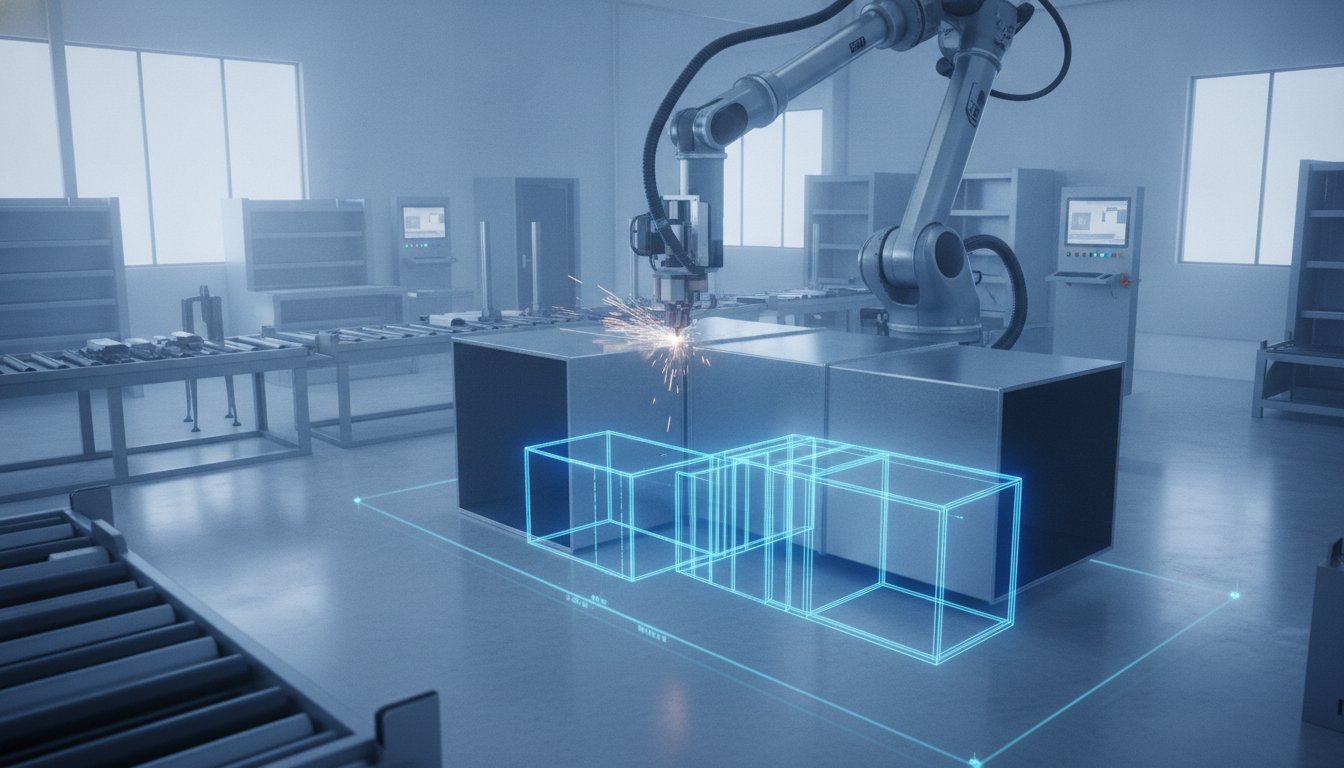
Nearly 42% of manufacturers have already pivoted to automated production; however, many commercial jobsites still struggle with the same manual errors and rework that plagued the industry decades ago. You know the frustration of opening a crate on-site only to find the spools don't match the digital model. Field collisions and slow fabrication lead times aren't just inconveniences. They're profit killers that stall your timeline and inflate your labor costs.
Precision is the only way forward in the 2026 HVAC landscape. This guide shows you how to bridge the gap between design and delivery. We'll explore how automated duct fabrication for commercial buildings turns BIM designs into precision reality, cutting through the typical administrative delays and manual bottlenecks. You will learn how automated coil-line production and BIM integration eliminate field errors and accelerate project timelines. We'll break down the transition from digital concept to physical result, focusing on how to achieve standardized quality for national accounts while reducing on-site labor through precision spooling. It's time to move from the digital file to a tangible product with surgical speed.
Key Takeaways
- Learn how automated coil-line production replaces slow manual layouts to deliver install-ready ductwork directly to your jobsite.
- Understand the ROI of precision fabrication, including how eliminating field-fitting errors can significantly reduce on-site labor costs.
- Discover the role of BIM coordination and spool drawings in bridging the gap between your digital model and automated duct fabrication for commercial buildings.
- See how standardized production and nationwide logistics allow national accounts to maintain consistent quality across every project site.
The Shift to Automated Duct Fabrication for Commercial Buildings
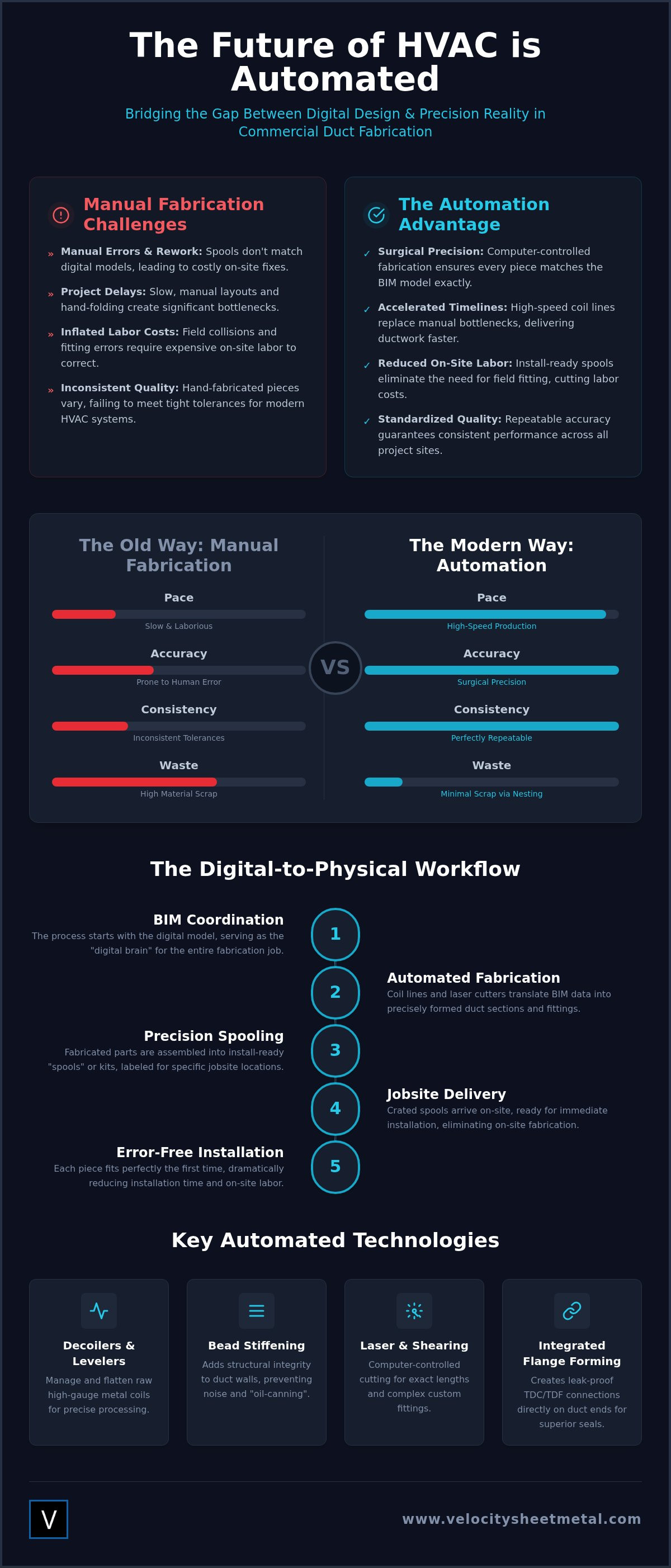
Automated duct fabrication is the computer-controlled process of forming HVAC components directly from raw metal coils. It eliminates the manual guesswork that has traditionally slowed down Ductwork construction. In the past, shops relied on manual layout, hand-folding, and physical templates. This "old way" is prone to human error and inconsistent tolerances that lead to field rework. Modern coil-line efficiency replaces these manual bottlenecks with a streamlined, digital-to-physical workflow that moves as fast as your project timeline requires.
Commercial projects involve thousands of linear feet of ductwork, and manual fabrication can't maintain the necessary pace. Hand-fabricated pieces often vary slightly from one to the next. These tiny discrepancies cause massive headaches during installation. Precision nesting and automated shearing ensure every piece matches the digital model exactly. It also slashes material waste. By optimizing how parts are cut from the coil, automated duct fabrication for commercial buildings reduces scrap that would otherwise end up in the bin, saving both time and raw material costs.
Why Commercial Projects Demand Automation
Complex designs define modern commercial architecture. High-pressure systems like Variable Air Volume (VAV) boxes and Air Handling Units (AHU) require airtight seals and rigid structures to operate efficiently. Manual fabrication often fails to meet these tighter tolerances consistently across a large-scale rollout. Automated duct fabrication for commercial buildings provides the repeatable accuracy needed for these high-performance environments. It meets high-volume requirements without the massive labor overhead of a manual shop. You get total consistency across the entire project, ensuring that every section of duct fits perfectly the first time it's lifted into the hangers.
Key Components of an Automated Line
A modern coil line is a multi-station powerhouse designed for continuous production. It handles every step of the process from the raw material input to the final formed duct section.
- Decoilers and Levelers: These stations manage high-gauge metal coils, flattening the material for precise processing.
- Automated Bead Stiffening: This process adds structural integrity to the duct walls, preventing noise or "oil-canning" during system operation.
- Shearing Stations: Computer-controlled blades cut the metal to exact lengths based on the BIM data.
- Integrated Flange Forming: Systems like TDC or TDF create leak-proof connections directly on the duct ends, ensuring a superior seal compared to manual slip-and-drive methods.
Technical Capabilities: Coil Lines and Precision Laser Cutting
Precision manufacturing requires more than just high-speed hardware; it demands a unified production flow where every machine communicates. The adoption of robotics and manufacturing automation has transformed the factory floor into a high-precision environment. We don't treat machines as standalone tools. We treat them as a synchronized system. This approach ensures that every piece of automated duct fabrication for commercial buildings meets the exact specifications of the digital model without the risk of manual variance.
Coil-Line Automated Rectangular Duct Production
The coil line is the workhorse of high-volume production. It transforms raw metal coils into finished L-sections or full-wrap duct in seconds. The process is methodical. Metal is decoiled, leveled, and beaded for stiffness. It's then sheared and notched with surgical accuracy. This system maintains strict SMACNA standards through automated reinforcement and flagging, ensuring every piece is structurally sound. For a deep-dive into the machinery involved, see our detailed look at coil line duct fabrication. This level of automation allows us to fulfill massive orders for national accounts while maintaining the quality of every fitting.
Custom Laser Cutting for Complex Fittings
Standard rectangular duct is only half the battle. Complex transition fittings and custom plenums require a different level of finesse. This is where precision laser cutting excels. Unlike traditional plasma cutters that can leave rough edges or heat-affected zones, lasers achieve tolerances that manual methods cannot touch. This precision is vital for automated duct fabrication for commercial buildings where complex transitions must fit into tight mechanical rooms. Automated nesting software maximizes every square inch of the sheet. It reduces the cost-per-part by minimizing scrap. We provide on-demand part production for OEMs and specialized commercial equipment, delivering components that are ready for immediate assembly.
From galvanized steel to heavy-gauge aluminum, material versatility is a core strength of our operation. Our "Authoritative Expert Operator" approach means we don't just "set and forget" the equipment. We prioritize constant machine calibration and preventative maintenance. This ensures that the first part of the day is as accurate as the last. Contractors looking to eliminate field errors can partner with an expert fabricator who understands the physical reality of the jobsite. This technical capability is what allows us to bridge the gap between a digital file and a high-performance HVAC system.
Automated vs. Manual Fabrication: ROI for Contractors
The financial impact of automated duct fabrication for commercial buildings is felt most clearly on the jobsite, not just the factory floor. Manual fabrication carries hidden costs that erode project margins. These include field-fitting errors, excessive scrap, and the constant need for highly skilled labor to perform basic assembly. Automation shifts the burden of precision from the installer to the machinery. According to industry data from 2023, manufacturers adopting automated systems saw a 30% increase in manufacturing efficiency and an 18% reduction in material waste. For a contractor, this translates directly to faster installation and lower overhead.
Manual shops often rely on legacy processes that lead to "make-it-fit" engineering in the field. When a spool doesn't line up, your crew spends hours modifying ductwork on a scissor lift. This doesn't just waste time; it compromises the integrity of the system. Automated fabrication ensures that every piece is an exact match for the digital design. This consistency is the only way to protect your schedule and your profit in a high-pressure commercial environment.
Reducing On-Site Labor Costs
Install-ready ductwork arrives pre-labeled and spooled according to your BIM model. This methodical approach allows for faster assembly by junior crews. You don't need a master fabricator on every floor when the components are designed to fit like a kit. This is a critical advantage during the current skilled labor shortage in the trades. You can deploy your most experienced personnel to manage high-level logistics while the automated system handles the technical accuracy. For more on optimizing your supply chain, review our guide on HVAC duct fabrication for mechanical contractors.
Material Efficiency and Waste Reduction
Buying metal in coils rather than individual sheets is the first step toward better material ROI. Automation allows for precision nesting, which calculates the most efficient way to cut parts from the coil. This process reaches an 18% reduction in material waste compared to manual marking and shearing. This efficiency is essential for LEED-certified commercial projects where waste diversion and environmental impact are key performance indicators. Precision also extends to the final shape of the part. We utilize CNC bending to maintain tight tolerances and avoid press brake forming defects that often occur with manual equipment. The result is a cleaner, more profitable jobsite with zero surprises during the final walkthrough.
BIM Coordination: The Digital Brain of Automated Fabrication
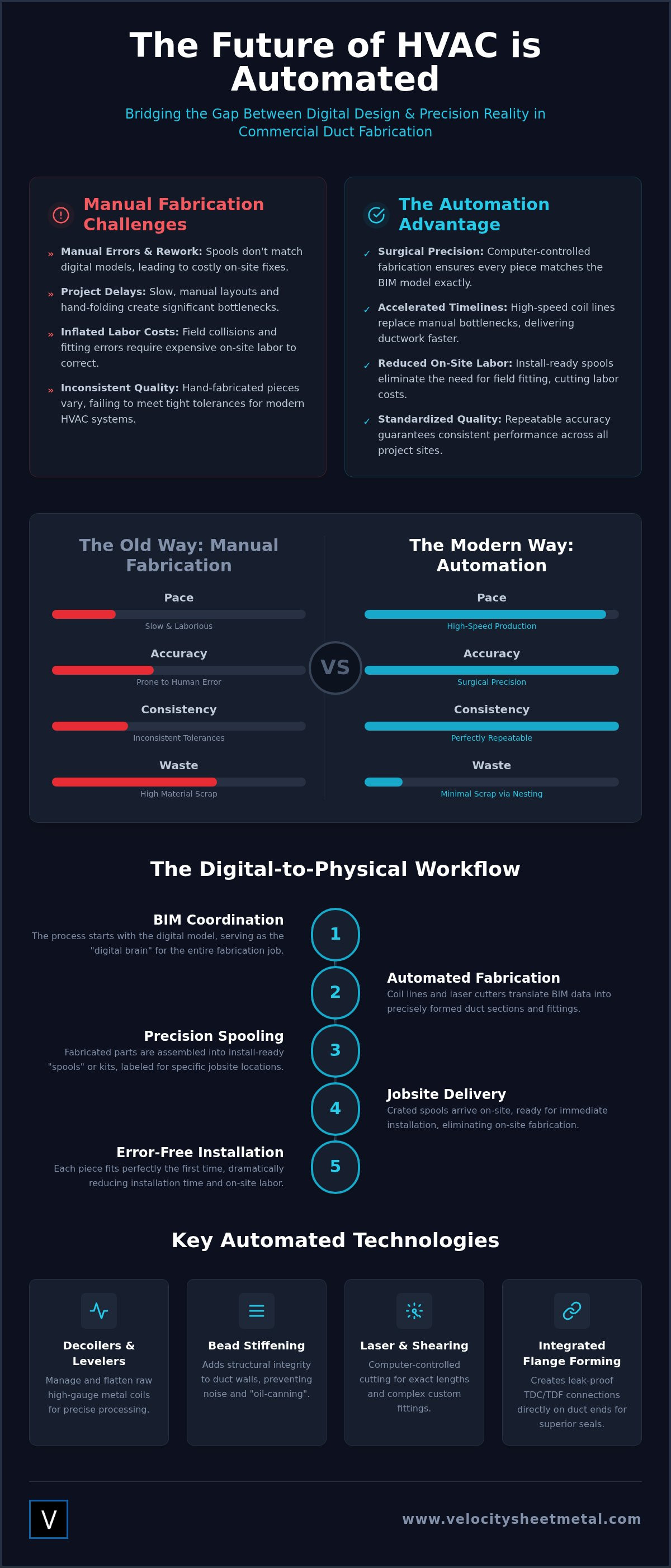
BIM (Building Information Modeling) acts as the central intelligence for modern HVAC production. It's the essential bridge between the engineer's vision and the factory floor. Without it, automated duct fabrication for commercial buildings is just fast machinery without a map. We translate complex .dwg and .ifc files directly into machine-ready instructions. This digital-to-physical workflow eliminates the manual data entry that often leads to transcription errors. By feeding the model directly into our coil lines and laser cutters, we ensure that the physical product is a 1:1 replica of the coordinated design.
From Model to Machine: The Seamless Workflow
The transition from a 3D model to a physical spool requires mechanical spooling expertise. In high-density commercial mechanical rooms, every inch counts. We break down the master model into fabricatable parts, or "spools," that are sized for easy transport and installation. This process ensures that high-volume orders aren't just produced quickly; they're also organized for logical assembly on-site. For a deeper look at how we optimize this process, explore our guide on BIM clash detection for HVAC fabrication. It's about moving from a digital concept to a physical result with surgical precision.
Eliminating Field Collisions
Field collisions are the primary cause of project delays and budget overruns. BIM coordination identifies pipe, conduit, and duct overlaps before a single piece of metal is cut. We use this data to resolve conflicts in the virtual environment. This "straight-talk" approach means you know every piece fits before it leaves our shop. You don't have to wait for an RFI (Request for Information) response while your crew stands idle. We resolve the clashes in the model so your team can focus on installation. This level of coordination reduces the need for on-site modifications and "make-it-fit" engineering. It turns the jobsite into an assembly zone rather than a fabrication shop.
Velocity Sheet Metal acts as the essential bridge between the engineer's model and the physical duct. We understand both the digital model and the factory floor. This dual expertise allows us to catch potential issues that a software-only firm might miss. We don't just fabricate; we coordinate. If you're ready to eliminate field errors and accelerate your timeline, contact our BIM coordination team to start your next project with total precision.
Scaling Production for National Accounts and OEMs
Scaling high-volume HVAC production requires more than just high-capacity machinery. It requires a repeatable system that delivers the same result in every crate. For national accounts and Original Equipment Manufacturers (OEMs), the stakes are higher. automated duct fabrication for commercial buildings must meet a specific standard that applies across every jobsite, regardless of geography. We focus on creating a bridge between your national design specs and the physical product, ensuring that a spool delivered to one coast is identical to one delivered to the other. This consistency is the foundation of a reliable national supply chain.
Standardization Across National Projects
Multi-site commercial brands cannot afford variation in their HVAC systems. Inconsistent duct quality leads to unpredictable energy performance and maintenance headaches across a portfolio. Our automated lines remove the "human factor" that causes manual shops to produce varying results. We provide a level of precision that ensures long-term reliability for every location. By partnering with an expert operator who understands both the digital model and the factory floor, national accounts gain a dependable partner. We treat your standardized specs as the absolute law of production, ensuring that every linear foot of ductwork meets your exact performance criteria.
Logistics and National Shipping
Moving high-volume rectangular duct across the country is a logistical challenge that local shops often can't handle. We've developed specific packaging and palletizing strategies to protect your investment during transit. Rectangular duct is prone to flange damage or structural warping if not handled correctly. We secure every load to ensure it arrives at your project site ready for immediate assembly. There is no room for "field-fitting" when the project is hundreds of miles from the shop.
Managing lead times is just as critical as the fabrication itself. We align our production schedule with your construction timeline to prevent jobsite congestion or installation delays. If you're managing a nationwide rollout or a complex multi-phase development, Contact Velocity Sheet Metal for a National Account Quote. We provide the transparency and speed you need to keep large-scale projects on track without the typical administrative delays.
We also offer on-demand part production for OEMs who need precision components without the overhead of maintaining their own fabrication shop. Whether it's custom transition fittings or specialized plenums, our laser cutting and CNC bending capabilities provide the "just-in-time" delivery modern manufacturing requires. We approach every large-scale spec with a "can-do" attitude grounded in industrial reality. We're ready to get to work immediately to solve your most complex industrial problems with surgical precision.
Precision Delivery for Modern Commercial HVAC
The future of industrial HVAC isn't found in manual bending or field-fitting. It's built in the digital model and executed on the automated production line. By integrating BIM data directly with coil-line technology, you eliminate the collisions and delays that compromise your project margins. Automated duct fabrication for commercial buildings provides the repeatable precision required for high-pressure systems and national rollouts. You move from digital concept to physical spool with surgical speed, reducing on-site labor and material waste.
Velocity Sheet Metal acts as your tech-savvy partner, bridging the gap between design and delivery. With over 50 years of combined industry management experience, we understand the complexities of the factory floor and the coordination required for full BIM services. Our nationwide shipping capability ensures your project stays on schedule, regardless of location. It's time to stop fighting manual errors and start building with precision. Let's get your next project moving at the speed of modern manufacturing.
Get a Precision Quote for Your Commercial HVAC Project
Frequently Asked Questions
What is the primary benefit of automated duct fabrication for commercial buildings?
Precision is the primary benefit. Automated duct fabrication for commercial buildings eliminates the human error inherent in manual layout. This ensures that every section of ductwork matches the digital model exactly. By producing install-ready components, contractors can reduce on-site labor and avoid the costly rework associated with field-fitting issues. It turns the jobsite into an assembly-only zone, accelerating the overall project timeline and protecting your profit margins.
Does automated fabrication support custom duct sizes and fittings?
Yes, automation fully supports custom specifications. While the coil line handles standard rectangular sections, our custom laser cutting and CNC press brake bending stations produce complex transition fittings and plenums. We use automated nesting software to maximize material usage for these unique parts. This allows us to provide on-demand part production for OEMs and specialized commercial equipment without the slow turnaround times of traditional manual shops.
How does BIM coordination integrate with the fabrication process?
BIM coordination acts as the digital blueprint for our machinery. We translate .dwg and .ifc files directly into machine instructions, removing the need for manual data entry. This digital-to-physical workflow allows for clash detection in the virtual environment before any metal is cut. Spool drawings break the model into manageable parts, ensuring that high-volume orders are produced and labeled for logical assembly on the jobsite.
What are the typical lead times for high-volume coil-line duct production?
Automated coil lines significantly reduce production time compared to manual methods. A multi-station line can transform raw coils into finished L-sections or full-wrap duct in seconds. While specific lead times vary based on project volume and current shop capacity, our goal is to align production with your construction schedule. We prioritize speed and technical capability to cut through the typical administrative delays that stall large-scale commercial projects.
Can automated ductwork meet SMACNA and local building codes?
Every component we fabricate meets the SMACNA HVAC Duct Construction Standard. Our automated lines include integrated bead stiffening and flange forming stations, such as TDF or TDC, to ensure leak-proof connections. This repeatable accuracy guarantees that your ductwork will pass pressure tests and meet all local building codes. We provide the standardized quality necessary for national accounts that require consistency across multiple project sites.
How does automated fabrication reduce material waste compared to manual methods?
Automation uses precision nesting to calculate the most efficient layout for every part. This process can lead to an 18% reduction in material waste compared to manual marking and shearing. By buying metal in coils rather than individual sheets, we further optimize material ROI. This efficiency is vital for LEED-certified commercial projects where waste reduction is a key performance metric and environmental requirement.
Does Velocity Sheet Metal provide nationwide shipping for commercial projects?
Velocity Sheet Metal provides comprehensive nationwide shipping for all commercial projects. We utilize specific packaging and palletizing strategies to protect rectangular duct and fittings during transit. This capability allows national accounts to maintain a single source of truth for their HVAC fabrication needs. We manage the logistics to ensure your high-volume orders arrive ready for installation, regardless of where your project is located in the US.
What materials can be processed through an automated coil line?
Our automated coil lines and laser cutters process a wide range of industrial materials. This includes galvanized steel, stainless steel, and heavy-gauge aluminum. We also utilize CNC press brake bending for specialized components that require high structural integrity. Our "Expert Operator" approach ensures that every material is processed according to its specific technical requirements, maintaining the tight tolerances required for modern automated duct fabrication for commercial buildings.